
San Shan Zheng Shen Bingling Gong is one of the most respected protective deities in Taoism and Chinese folk religion. His full sacred title is the “Thunder and Fire Supreme Commander Overseeing the Three Mountains and Bingling Benevolent Emperor King.” In folk culture, he is widely known as Taishan Sanlang or Bingling Taizi.
Within the Taoist pantheon, Bingling Gong possesses a dual identity. In religious tradition, he is regarded as the third son of the Eastern Sacred Emperor of Mount Tai, while in later mythological literature such as Investiture of the Gods, he was canonized as the supreme deity governing the Three Mountains. Through this combination of Taoist theology, mountain worship, and literary mythology, Bingling Gong became an important deity associated with sacred mountains, divine judgment, thunder, fire, and spiritual protection.
Who Is Bingling Gong?
Bingling Gong is deeply connected to the religious culture surrounding Mount Tai, one of the holiest mountains in Chinese tradition. Early records portray him as a mysterious and powerful mountain spirit with authority over local geography and spiritual order.
Over time, Taoism elevated his status and formally incorporated him into the celestial bureaucracy. Today, he is worshipped not only as a mountain guardian but also as a divine marshal capable of commanding thunder and fire to suppress evil and protect the people.
Origins and Dual Identity of Bingling Gong
Taoist Origins: The Third Son of the Eastern Sacred Emperor
Historical references to Bingling Gong can be traced back to the Book of Wei, where he was identified as the third son of the Taishan deity, earning the title “Taishan Sanlang” (“Third Son of Mount Tai”).
Before the Tang dynasty, he was often described as an awe-inspiring mountain spirit worshipped throughout the Mount Tai region. Some historical records even claimed that local people revered him more than Tianqi, the principal deity of Mount Tai itself.
During the Later Tang and Song dynasties, emperors repeatedly bestowed official titles upon him, including:
- General Weixiong
- Bing Ling Gong
- Zhisheng Bingling Wang
These imperial recognitions established his official position within state-supported Taoist worship traditions.
His authority over sacred mountains also reflects the cosmic directional order associated with The Five Elders of the Five Directions.
Literary Identity: Huang Tianhua in Investiture of the Gods
In the famous Ming dynasty novel Investiture of the Gods (Fengshen Yanyi), Bingling Gong became associated with Huang Tianhua, the heroic son of Huang Feihu.
According to the story, Huang Tianhua sacrificed his life in battle against the Shang dynasty forces. After his death, Jiang Ziya canonized him and appointed him as the deity responsible for governing the Three Mountains.
This literary portrayal significantly increased Bingling Gong’s popularity among common believers and reinforced his image as a righteous warrior deity and celestial protector.
Core Divine Functions of Bingling Gong
Guardian of Mountains and Sacred Land
As the divine lord of the Three Mountains, Bingling Gong oversees mountain spirits, sacred geography, and territorial protection.
He supervises mountain deities, protects sacred landscapes, and maintains spiritual balance within mountainous regions, especially around Mount Tai.
His role complements the sacred territorial system represented by The Great Emperors of the Five Great Mountains, where mountain deities collectively uphold cosmic order.
Judge of Life, Death, and the Spirit Realm
Bingling Gong also possesses authority related to moral judgment and underworld administration.
In Taoist and folk belief, he supervises human virtue and wrongdoing, assists in maintaining life-and-death records, and helps determine karmic consequences and lifespan.
Because of these functions, worshippers frequently invoke him during funeral rites and ancestral ceremonies, praying for peace and protection for deceased family members.
Commander of Thunder and Fire
One of Bingling Gong’s most powerful aspects is his role as a commander of celestial thunder and fire.
He leads divine forces capable of:
- suppressing evil spirits
- extinguishing destructive influences
- purifying spiritual corruption
- enforcing heavenly justice through thunder power
These fire-related attributes connect him symbolically with the Taoist fire deity system described in Fire Ministry Emperor.
In some traditions, Bingling Gong is also linked to martial fire gods and heavenly marshals responsible for illuminating darkness and protecting the righteous.
Protector of Health, Fortune, and Community Peace
Among ordinary believers, Bingling Gong is widely worshipped as a benevolent protective deity who grants blessings and removes disasters.
People pray to him for:
- prosperous business
- favorable harvests
- protection from evil spirits
- peace within the household
- healing from illnesses, especially eye diseases
- safe travel and territorial security
Because of his protective nature, he became an important guardian deity throughout northern China and the Mount Tai religious tradition.
Bingling Gong in Taoist and Folk Belief
Within the broader Taoist cosmological system, Bingling Gong forms part of the sacred structure connecting mountains, celestial administration, and natural forces.
He is often worshipped together with female deities such as Bixia Yuanjun, creating the Mount Tai devotional tradition sometimes summarized as:
“Male Protector Bingling Gong, Female Protector Bixia Yuanjun.”
His worship reflects the Taoist belief that sacred mountains serve as living spiritual centers governed by powerful celestial beings.
![Traditional statue or temple painting of Bingling Gong]](https://taoist-world.com/wp-content/uploads/2025/12/image-181.png)
Spiritual Symbolism and Modern Meaning
Today, Bingling Gong symbolizes:
- righteous divine authority
- protection of sacred territory
- purification through thunder and fire
- blessings and prosperity
- the balance between justice and compassion
In Taoist-inspired jewelry and religious artwork, his image is frequently used in protective talismans symbolizing courage, stability, and spiritual defense.
His enduring popularity demonstrates the continuing importance of mountain worship and divine guardianship within Chinese religious culture.
Related Posts
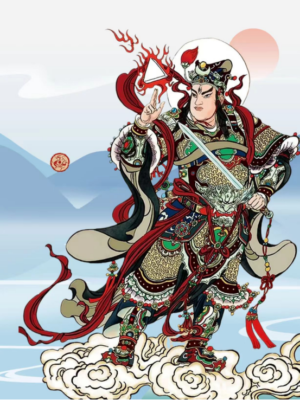
Youyi Lingguan – The Divine Patrol Officer of the Three Realms
The Youyi Lingguan (Wandering Inspector Spiritual Officer) is a powerful protective deity in Taoism known [...]
Dec
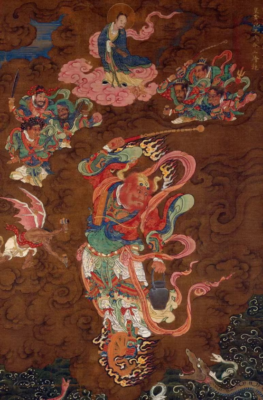
Wang Lingguan – The Supreme Guardian Deity of Taoism
Wang Lingguan is one of the most powerful and respected guardian deities in Taoism, revered [...]
Dec
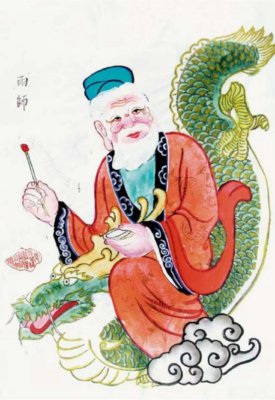
Rain Master (Rain God in Taoism)
Rain Master, also known as Rain God, Ping Yi, Xuan Ming, or Bi Xing, is [...]
Dec