
Origins and Mythological Background
The Third Lady of Mount Hua, also known as the Third Holy Mother, is one of the most beloved female deities in Chinese Taoist and folk tradition. She is regarded as the daughter of the Western Mountain deity within the Taoist Five Sacred Mountains system and is closely connected with Mount Hua, one of the most important sacred mountains in China.
Early records of the goddess appeared during the Tang Dynasty in the Guang Yi Ji, where she was associated with divine compassion and the protection of ordinary people. Later, during the Song and Ming dynasties, her image merged with popular folklore and evolved into the famous legend of Chen Xiang Rescuing His Mother, turning her into a lasting symbol of maternal love, sacrifice, and justice.
In Taoist cosmology, the Third Holy Mother resides in the sacred palaces of Mount Hua and governs spiritual energy, clouds, rainfall, and regional harmony. Her worship became especially popular among families praying for peace, childbirth, health, and family unity.
Core Divine Functions
Protection of Mount Hua and Natural Harmony
As a mountain goddess associated with Mount Hua, the Third Holy Mother oversees the spiritual veins, weather patterns, and natural balance of the sacred mountain region. She is believed to regulate rainfall, prevent floods and droughts, and safeguard local agriculture and villages.
Her role reflects the Taoist understanding that mountains serve as spiritual bridges between heaven and earth. Similar concepts can also be found in beliefs surrounding the The Great Emperors of the Five Great Mountains, where sacred mountains are viewed as divine guardians of regional order and cosmic balance.
Compassion and Blessings for Families
Among ordinary believers, the Third Holy Mother is widely worshipped as a compassionate protector of families and mothers. Devotees often pray to her for:
- Safe childbirth
- Protection of children
- Family harmony
- Marital happiness
- Relief from illness and misfortune
Unlike more distant celestial rulers, her image is deeply humanized through folklore, making her especially approachable in folk religion.
The Lotus Lantern Symbol
The sacred Lotus Lantern is the central divine object associated with the Third Holy Mother. It symbolizes:
- Spiritual illumination
- Maternal protection
- Purification of evil
- Hope and justice
In folk stories, the lantern possesses supernatural power capable of dispelling darkness and protecting righteous individuals. The symbol later became deeply embedded in Chinese opera, literature, and temple art.
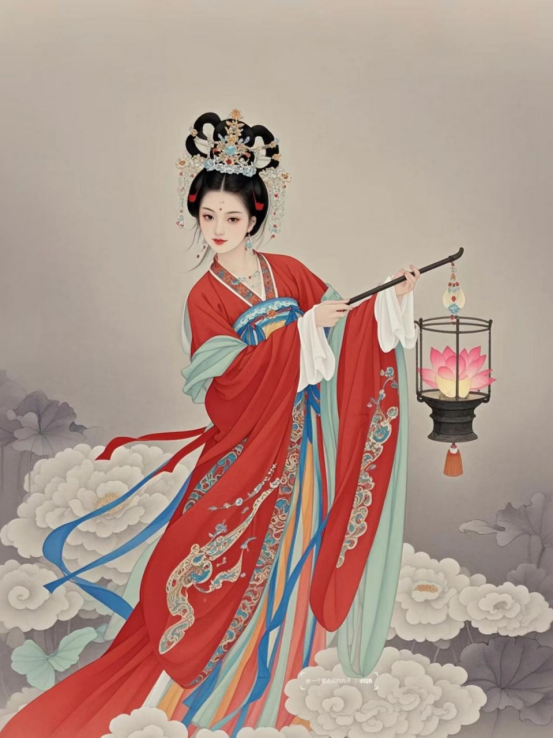
The Legend of Chen Xiang Rescuing His Mother
The most famous story associated with the Third Holy Mother is the legend of Chen Xiang Rescuing His Mother. According to the tale, the goddess fell in love with a mortal scholar and gave birth to Chen Xiang, violating heavenly laws that prohibited relationships between immortals and humans.
As punishment, she was imprisoned beneath Mount Hua. Years later, her son Chen Xiang obtained divine power and split the mountain open to rescue her. The story became one of the most influential themes in Chinese folklore and traditional opera.
The narrative represents:
- Filial piety
- Resistance against unjust authority
- Maternal devotion
- The triumph of righteousness
This legendary theme shares spiritual similarities with the compassionate qualities associated with Xiwangmu, another major female figure in Taoist mythology connected with immortality and divine motherhood.
Worship Sites and Religious Influence
The most important temples dedicated to the Third Holy Mother are located around Mount Hua, especially:
- Cuiyun Palace (Biyun Palace)
- The Third Holy Mother Hall
- Xiyue Temple areas connected to Western Mountain worship
Pilgrims traditionally visit these sacred locations to pray for blessings, safe travel, and family prosperity.
In regional folk customs, the Third Holy Mother also became a guardian deity for women and children. During temple festivals, believers often offer lotus lamps, incense, and prayers seeking divine protection.
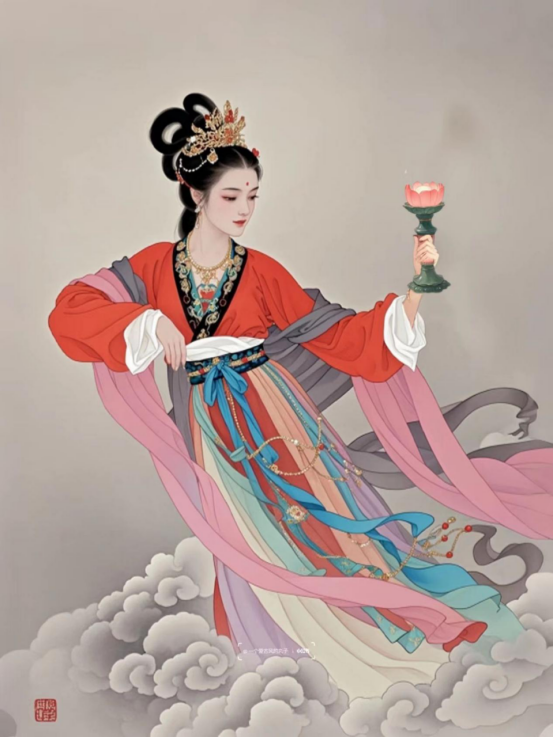
Cultural Legacy in Chinese Tradition
The Third Holy Mother remains one of the most emotionally resonant goddesses in Chinese religious culture. Her stories appear in:
- Traditional Chinese opera
- Folk paintings
- Temple murals
- Shadow puppetry
- Modern television and animation adaptations
Her image blends Taoist theology with human emotion, creating a rare balance between sacred authority and maternal compassion. Through centuries of storytelling, she became a symbol of courage, love, sacrifice, and spiritual protection.
Lasting Significance of the Third Holy Mother
The belief in the Third Holy Mother reflects the fusion of Taoist mountain worship, folk religion, and family-centered morality in Chinese culture. As both a celestial goddess and a compassionate mother figure, she embodies ideals of mercy, protection, and emotional devotion.
Even today, her legends continue to inspire worshippers, artists, and storytellers, preserving her position as one of the most beloved female deities in Chinese spiritual tradition.
Related Posts
Bixia Yuanjun: The Goddess of Mount Tai in Taoist Belief
Origins of Bixia Yuanjun Bixia Yuanjun, also known as the Goddess of Mount Tai, is [...]
Dec

Doumu Yuanshun: Mother of the Stars in Taoism
The Supreme Mother of the Stars Doumu Yuanshun, also known as Doulao Yuanshun, is one [...]
Dec
The Great Emperors of the Five Great Mountains
The Great Emperors of the Five Great Mountains are central figures in Taoism’s sacred mountain [...]
Dec