
The Thirty-Six Divine Generals of the Thunder Ministry are important guardian deities within the Taoist Thunder Ritual system. They serve under the supreme thunder deities of the Thunder Department and are responsible for summoning clouds, distributing rain, punishing evil, and maintaining heavenly order.
In Taoist belief, these divine generals function as celestial military officers who carry out thunder punishments and enforce heavenly law. Although the list of the Thirty-Six Generals differs among Taoist scriptures and ritual traditions, their core role within thunder rituals and cosmic supervision remains consistent.

Position Within the Thunder Ministry
The Thirty-Six Divine Generals belong to the Five Thunder command structure and hold an important status within Taoist thunder rituals.
They are frequently invoked during ceremonies involving:
- Exorcism
- Disaster relief
- Rain prayers
- Spiritual purification
- Demon suppression
Their authority comes directly from the celestial thunder system governed by the supreme thunder deities.
Within the military hierarchy of the Thunder Department, these generals operate beneath the commanders discussed in Five Marshals of the Thunder Ministry, who lead the heavenly thunder armies and issue divine commands during celestial campaigns.
Role in Taoist Thunder Rituals
The Thirty-Six Divine Generals are closely connected to Taoist Thunder Magic cultivation and ritual practice.
A core principle of thunder rituals is:
“Unifying qi with thunder and revealing the deity through thunder.”
Through talismans, hand seals, incantations, and thunder scriptures, Taoist priests invoke the generals to establish communication between heaven and humanity.
The generals assist in:
- Summoning thunder and rain
- Eliminating evil spirits
- Protecting sacred ritual spaces
- Strengthening thunder rites
- Enforcing celestial justice
Because of their direct connection to heavenly punishment, they are regarded as some of the most powerful ritual guardians in Taoism.

Integration of Folk Belief
One distinctive characteristic of the Thirty-Six Divine Generals is the integration of famous folk deities into the Thunder Ministry system.
Figures such as Guan Yu and Zhao Gongming gradually became incorporated into Taoist thunder traditions. Their roles expanded beyond folk worship and became associated with celestial protection, demon suppression, and thunder authority.
This reflects the openness and adaptability of the Taoist pantheon, where respected heroes and popular deities could enter the celestial bureaucracy through religious development and popular belief.
Connection With the Five Thunder System
The Thirty-Six Divine Generals are also connected to the Five Thunder traditions, which correspond to the five directions and five elemental forces in Taoist cosmology.
Their responsibilities involve maintaining the balance between heaven and earth through thunder authority, weather control, and divine judgment.
The broader thunder structure is closely related to the system explained in Five Directional Thunder Emperors, where the thunder powers of the five cosmic directions are governed by supreme celestial rulers.
Within this hierarchy, the Thirty-Six Divine Generals act as frontline executors of heavenly commands.
Cultural and Religious Influence
Over centuries, the Thirty-Six Divine Generals became deeply integrated into Taoist religious culture and Chinese folk belief.
Their images appear in:
- Taoist temple murals
- Thunder ritual manuals
- Religious statues
- Folk operas and legends
- Sacred talismans and ceremonial texts
The thunder deity system also includes well-known thunder gods such as Thunder God Lei Gong, whose role as an executor of thunder punishment complements the authority of the Thirty-Six Divine Generals.
Together, these deities symbolize heavenly justice, protection, and the divine power of thunder.
Conclusion
The Thirty-Six Divine Generals of the Thunder Ministry occupy an important place within Taoist thunder traditions as celestial guardians and enforcers of heavenly law.
Through thunder rituals, exorcism practices, weather control, and spiritual protection, they became powerful symbols of divine authority and cosmic order. Their continued presence in Taoist belief reflects the enduring importance of thunder as both a natural force and a manifestation of heavenly justice.
Related Posts
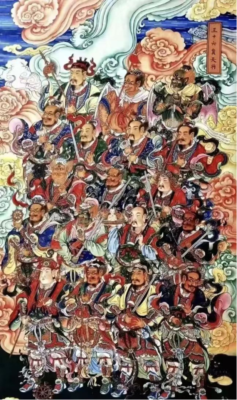
The Thirty-Six Heavenly Generals in Taoism: Guardians of Thunder, Exorcism, and Celestial Justice
The Thirty-Six Heavenly Generals are one of the most important groups of martial guardian deities [...]
Dec
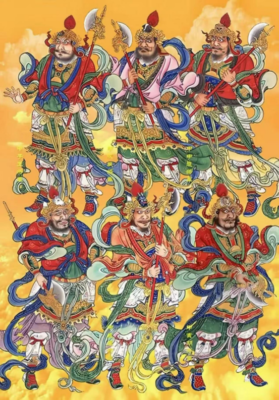
The Six Ding and Six Jia Generals in Taoism | Guardian Deities of Divine Protection
Introduction The Six Ding and Six Jia Generals are among the most important guardian deities [...]
Dec
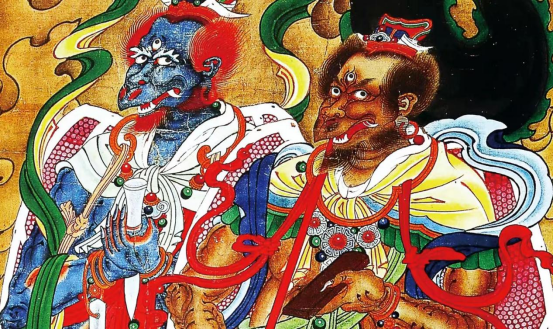
Left Attendant General Qing Lei: The Taoist Thunder Deity of Vitality and Divine Justice
The Left Attendant General Qing Lei (左侍将青雷将军), formally known as General Qinglei of the Left [...]
Dec