
The Judge is a core civil deity in the Taoist underworld system, directly under the Fengdu Emperor and the Ten Yama Kings. They conduct trials, record deeds, and judge good and evil, acting as the key judicial executors connecting higher-level and local ghost officials. In essence, they are the “judicial judge” and “archivist” of the underworld court.
This position represents the legal and administrative foundation of the underworld system, reflecting the broader structure of Taoist afterlife courts described in studies of the Ten Magistrates of the Underworld Realm.Every action in the mortal realm can have repercussions after death, which judges oversee and record. This concept aligns with the structure explained in Ten Yama Kings of the Underworld.
Origin and Role of the Judge
The belief in underworld judges originates from ancient human imagination regarding the order of the afterlife. Taoism later incorporated these judges into its pantheon, formally assigning them as core administrative and judicial officials. They report to the Ten Yama Kings, and senior judges could even meet the Fengdu Emperor to report their affairs.
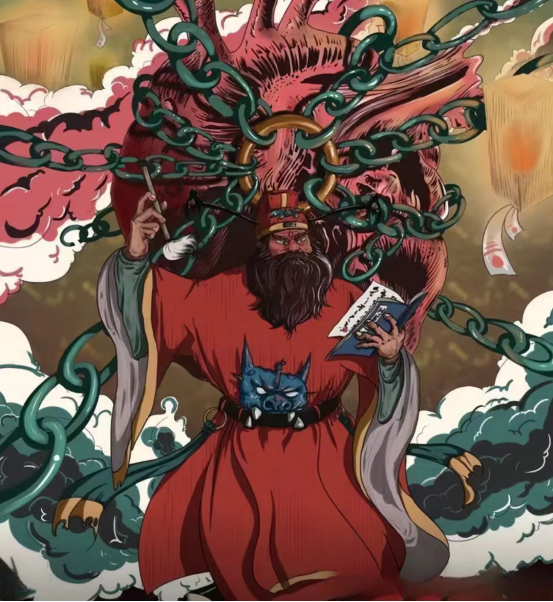
Judges are typically depicted as scholars wearing black or red robes with a black cap. They hold instruments such as the life and death book, red pen, handcuffs, or tokens, representing both scholarly demeanor and judicial authority.
Four Main Types of Judges
1. Judge of Rewarding Virtue
This judge records all virtuous deeds of souls during their lifetime, such as saving lives or helping the weak. During trials, they can reduce punishments based on merit or guide virtuous souls to a favorable afterlife.
2. Judge of Punishing Evil
This judge has a stern face, holding the evil deeds book and punishment list. They document crimes like murder, theft, or harming the virtuous. Punishments are then recommended to the Ten Yama Kings for approval and executed by ghost guards.
3. Investigator Judge
Also called the Inspector Judge, they verify all records from the Rewarding Virtue and Punishing Evil judges. They also inspect actions in the living world to ensure fairness in judgment and prevent omissions.
4. Judge of Underworld Law
This judge holds the underworld legal code and life and death book, interpreting laws and managing the lifespan, fortune, and fate of beings. A famous figure in popular culture is Cui Jue (Cui Fu-jen), a former mortal county magistrate renowned for integrity, later enshrined as an underworld judge.
Core Functions of Judges
Judges perform three essential duties:
- Recording and Archiving: They establish a “good and evil book” for each soul, documenting actions and words throughout life.
- Preliminary Judgment: Before final approval by the Ten Yama Kings, judges review records, propose recommendations, and submit decisions for higher confirmation.
- Execution of Decisions: Based on judgments, they issue soul tokens, punishment documents, or guide virtuous souls to reincarnate, supervising ghost guards and underworld officials to prevent favoritism or corruption.
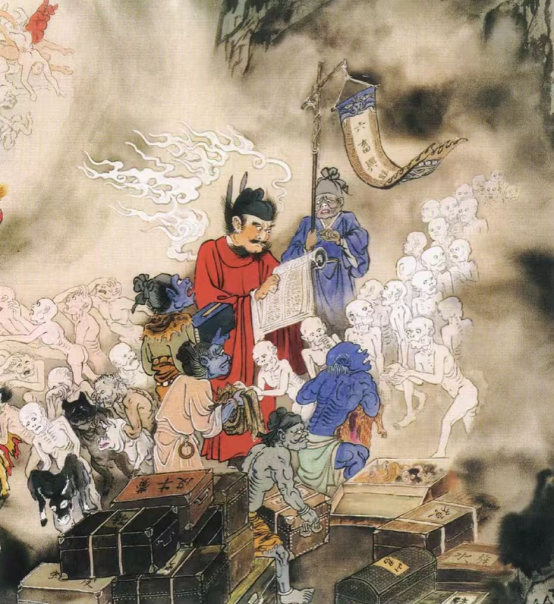
Through these processes, judges maintain fairness and order across the underworld system, reflecting traditional concepts of karmic law and underworld justice discussed in research on underworld legal codes and folk beliefs.
Related Posts
All the Sages of Fengdu: Taoist Netherworld Deities and Their Roles
The Sages of Fengdu are a collective group of deities and spiritual officials within the [...]
Dec
Niu Tou Ma Mian(Ox-Head and Horse-Face)
In Taoist belief, Niu Tou Mahai are underworld enforcers responsible for escorting souls into the [...]
Dec

Ten Yama Kings of the Underworld
The Ten Yama Kings are the ten rulers of the underworld in Taoism and folk [...]
Dec