
In Taoist belief, Niu Tou Mahai are underworld enforcers responsible for escorting souls into the realm of the dead. They serve beneath powerful Yin deities such as the Fengdu Emperor and the Ten Yama Kings. Their terrifying appearance and relentless duties made them some of the most recognizable figures in Chinese folk religion and Taoist culture.
Physical Characteristics
Niu Tou, or “Ox Head,” has the body of a human and the head of an ox. He usually appears with large horns, a muscular body, and a frightening expression. In some traditions, people also call him Abang or Abfang.
Mahai, or “Horse Face,” has the head of a horse and the body of a human. He often appears with bulging eyes and a long face. His expression looks fierce and intimidating.
Both figures usually carry steel forks, iron chains, soul hooks, or heavy shackles. These tools symbolize punishment and the enforcement of karmic law. Their frightening appearance reminds people that death and judgment cannot be avoided.or soul-locking hooks. Their terrifying forms symbolize the unavoidable power of death and karmic judgment.

Functions and Duties
The main duty of Niu Tou Mahai is to escort deceased souls into the underworld. They follow the commands of ghost officials and act according to the records contained within the Book of Life and Death.
They guide souls along the Yellow Spring Road and escort them across the Naihe Bridge. Afterward, they deliver spirits to the courts of judgment. In addition, they guard the prisons and gates of hell. They also help carry out punishments against sinful souls.
Many Taoist traditions describe them as strict but loyal enforcers. Their role reflects the highly organized structure of the Taoist underworld.
Position in the Taoist Underworld
Within the underworld hierarchy, Niu Tou Mahai function as frontline ghost officers. They carry out the orders issued by higher-ranking rulers and judges. Although they possess great authority over wandering spirits, they still remain subordinate to the major underworld deities.
Meanwhile, the broader management system of the spirit world appears in All the Sages of Fengdu.
In Taoist belief, these systems work together to preserve cosmic balance and moral order.
Cultural Origins and Religious Integration
The origins of Niu Tou Mahai can be traced back to Buddhist traditions and ancient Indian mythology. Early Buddhist scriptures already mentioned ox-headed demons responsible for punishing souls after death.
However, after Buddhism entered China, local beliefs gradually transformed these figures. Chinese folk religion combined them with the concept of Mount Tai spirit governance and Taoist underworld cosmology. Over time, they also became associated with the Luofeng Mountain hell system.
During the Tang and Song dynasties, storytellers and folk operas popularized their image even further. As a result, Niu Tou and Mahai eventually became a fixed pair within Taoist afterlife culture.
The relationship between Taoist belief and folk adaptation is also discussed in Taoist Philosophy vs. Taoist Religion.
Nowadays, the image of Ox-Head and Horse-Face remains one of the most recognizable symbols of the Chinese underworld in both Taoist belief and East Asian popular culture.
Popular Image in Folk Culture
In folk stories and literary works, Niu Tou Mahai sometimes display surprisingly human behavior. Although they carry out their duties faithfully, stories often portray grieving families attempting to bribe them with paper money and offerings.
At the same time, they appear harsh toward ordinary spirits but cautious around powerful ghosts or influential underworld officials. These portrayals reflect ordinary people’s imagination of the bureaucracy of the afterlife.
Consequently, Niu Tou Mahai became more than terrifying demons. They also evolved into cultural symbols representing fear, justice, corruption, and the uncertainty of death.ut enforcers like Niu Tou Mahai, the balance between the human world and the realm of spirits would collapse into chaos. Their presence reinforces Taoist teachings about morality, accountability, and respect for cosmic law.
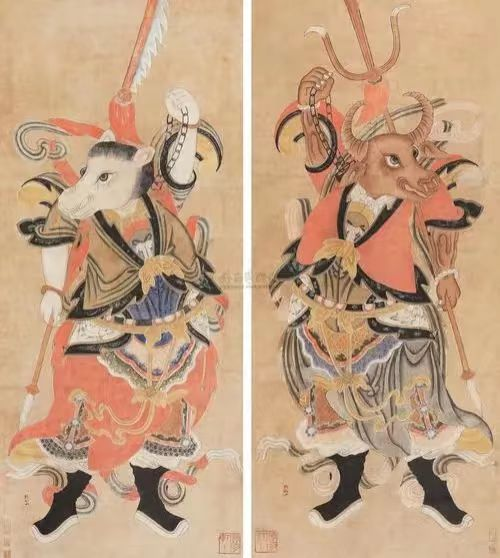
Even in modern times, discussions and shared artwork related to traditional depictions of Niu Tou Mahai continue to circulate widely within folk religion communities online.
Symbolism and Religious Meaning
Niu Tou Mahai symbolize the inevitability of death and karmic judgment. Their frightening appearance warns people against evil deeds and moral corruption.
At the same time, they also represent order within the underworld. Taoist belief teaches that the spirit world must follow strict laws and hierarchies. Without enforcers such as Niu Tou Mahai, chaos would spread between the human world and the realm of spirits.
Therefore, these figures continue to hold an important place in Taoist ritual culture and Chinese folk belief.
Related Posts
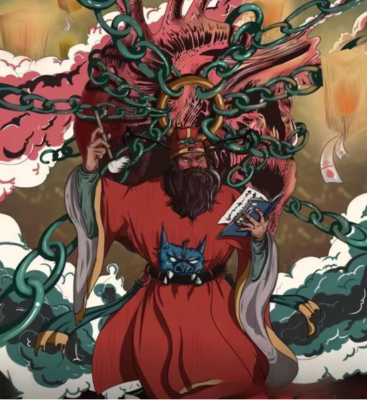
Underworld Judge in Taoism: Roles and DutiesUnderworld Judge
The Judge is a core civil deity in the Taoist underworld system, directly under the [...]
Dec
The True Spirits of the Six Heavenly Palaces in Luofeng
Also known as the Immortals of the Six Heavenly Palaces, the True Spirits of the [...]
Dec

Ten Yama Kings of the Underworld
The Ten Yama Kings are the ten rulers of the underworld in Taoism and folk [...]
Dec