
Governing by Non-Interference in Taoist Philosophy
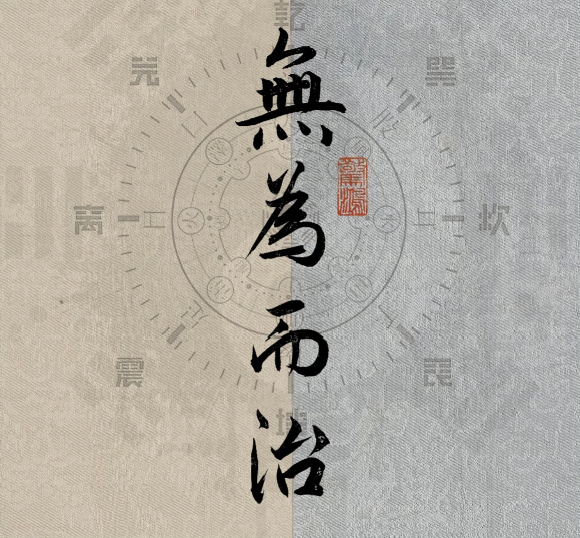
The Taoist principle of governing by non-interference, often associated with the concept of Wu Wei, is one of the most important political and philosophical teachings in Taoism. Originating from the ideas of Laozi in the Tao Te Ching, it advocates governing in accordance with natural laws rather than through excessive force, control, or artificial intervention.
This philosophy does not encourage passivity or doing nothing. Instead, it teaches rulers and individuals to avoid actions that violate the natural order of life. By respecting the inherent rhythms of society and nature, harmony and stability can emerge naturally.
Governing by non-interference derives directly from the core tenet that Tao follows nature.
The Meaning of Wu Wei
The term Wu Wei (无为) is often translated as “non-action,” but its deeper meaning is closer to “non-forced action” or “acting without artificial interference.”
Laozi believed that the Dao nurtures all things without trying to dominate them. In the same way, rulers should not excessively interfere with the lives of the people through harsh laws, endless taxation, or rigid control.
According to Taoist thought:
- Actions should follow natural laws
- Governance should avoid unnecessary interference
- Society functions best when allowed to develop organically
This does not mean abandoning responsibility. Rather, it means governing wisely, simply, and without oppressive force.
Wu Wei and the Tao
Laozi stated that:
“The Dao always acts through non-action, yet nothing is left undone.”
This idea means that when actions align with the natural order, results arise effortlessly and effectively.
The concept of governing by non-interference is an essential part of profound Daoist thought and philosophy. Taoism views the universe as a self-balancing system, where excessive interference often creates disorder instead of harmony.
In politics, this philosophy encourages rulers to:
- Reduce harsh punishments
- Lower taxes and burdens
- Avoid unnecessary wars
- Allow people to live naturally and peacefully
When rulers interfere less, people can develop their own creativity, stability, and prosperity.
Non-Interference in Government
Minimal Intervention
Taoist political philosophy opposes aggressive and controlling governance. Laozi criticized rulers who relied on:
- Excessive laws
- Heavy taxation
- Forced labor
- Militarism
He believed such actions disrupted the natural balance of society and created suffering among the people.
The ideal government in Taoism is simple, restrained, and humble.
The Ideal Society
Laozi described an ideal society as one where:
- People live peacefully
- Communities remain harmonious
- Daily life is simple and content
- Natural customs are preserved
This vision is sometimes summarized as “small states with few people,” not as backwardness, but as a society free from excessive ambition and artificial complexity.
Historically, aspects of this philosophy influenced the early Han Dynasty’s policy of reduced intervention, which contributed to periods of prosperity and recovery.
Applying Wu Wei in Personal Life
The principle of non-interference is not limited to politics. Taoism also teaches individuals to practice Wu Wei in daily life.
This includes:
- Following natural rhythms
- Letting go of excessive desires
- Avoiding unnecessary conflict
- Acting with humility and flexibility
Taoists often compare the ideal person to water:
- Soft yet powerful
- Humble yet persistent
- Nourishing without competing
By avoiding forced struggle and attachment, individuals can achieve greater inner peace and spiritual freedom.
People often confuse this governance idea, so you can learn more differences between Taoist Philosophy vs. Taoist Religion.
The Spiritual Meaning of Governing by Non-Interference
At its deepest level, governing by non-interference reflects the Taoist belief that harmony cannot be forced into existence. Whether ruling a country or cultivating oneself, balance arises through alignment with the Dao rather than domination.
Wu Wei teaches that true wisdom lies not in controlling everything, but in understanding when not to interfere. By respecting natural order and allowing life to unfold according to its own principles, both society and the individual can move toward lasting harmony.
Related Posts

Tao Follows Nature: The Core Principle of Taoist Philosophy and Natural Harmony
Introduction When people first encounter the phrase “Tao follows nature,” they often assume it is [...]
Dec
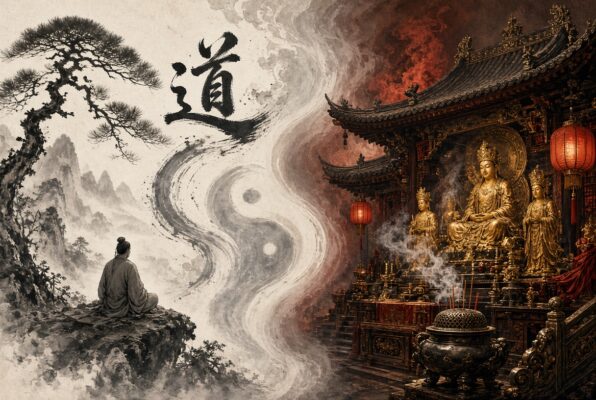
Taoist Philosophy vs. Taoist Religion: Key Differences Explained
Introduction When people first explore Taoism, they often assume it refers to a single, unified [...]
Dec

How to Stop Overthinking: A Taoist Guide to Quieting the Mind
Introduction Why Do We Overthink? Many people struggle with overthinking. A past mistake keeps replaying [...]
Jun