Origins of the Five Camp Gods
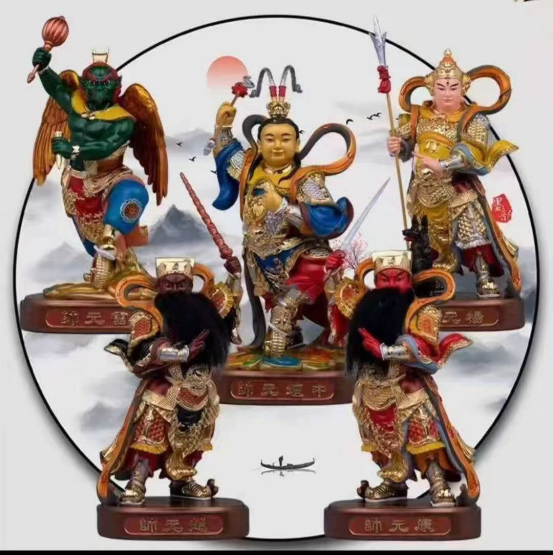
The Five Camp Gods are important guardian deities in Taoism and Chinese folk religion who defend homes, villages, temples, and sacred territory through the protection of the five directions: East, South, West, North, and Center.
Within Taoist ritual systems, they are regarded as powerful divine generals who command celestial troops, expel evil spirits, suppress harmful influences, and preserve spiritual order. The Five Camp system is especially important in rituals related to:
- House protection
- Temple consecration
- Exorcism ceremonies
- Village boundary protection
- Spiritual purification
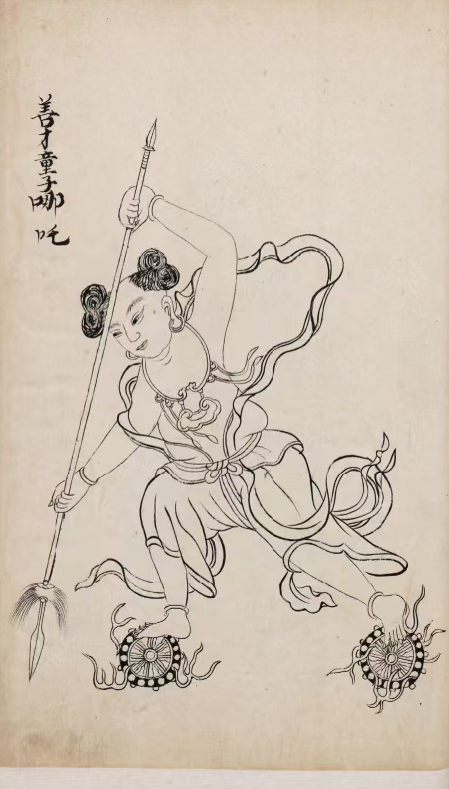
At the center of the Five Camps stands the famous Marshal of the Central Altar, Nezha, who commands the overall defensive formation of the five directions.
Structure of the Five Camps
The Five Camp Gods form a sacred directional defense system based on Taoist cosmology, military symbolism, and Five Elements theory.
Central Camp — Marshal Nezha
The Central Camp is led by Li Nezha, the Middle Altar Marshal. He commands the Three Qin Army of the Central Altar and serves as the supreme commander of all five camps.
Characteristics of the Central Camp include:
- Yellow banner
- Yellow complexion
- Correspondence with the Earth element
- Protection of the center
- Expulsion of evil spirits
- Overall coordination of the five directions
In Taoist belief, Nezha’s authority allows him to command divine troops capable of suppressing demonic forces and stabilizing spiritual energy.
Eastern Camp — General Zhang Jiqing
The Eastern Camp is governed by General Zhang Jiqing, commander of the Nine Barbarian Army.
Attributes include:
- Blue banner
- Blue complexion
- Association with the Wood element
- Protection of the eastern direction
- Prevention of invading spirits from the east
The eastern direction symbolizes growth and vitality, making the Eastern Camp especially important in maintaining harmonious household energy.
Southern Camp — General Xiao Qiming
The Southern Camp is led by General Xiao Qiming, commander of the Eight Barbarian Army.
His responsibilities include:
- Red banner
- Red complexion
- Association with the Fire element
- Regulation of southern fire energy
- Protection against destructive influences from the south
The southern direction is traditionally connected with spiritual illumination and yang energy within Taoist cosmology.
Western Camp — General Liu Wuxiu
The Western Camp is commanded by General Liu Wuxiu, leader of the Six Armies.
Key features include:
- White banner
- White complexion
- Association with the Metal element
- Defense of the western direction
- Stabilization of household fortune and security
The Western Camp is associated with restraint, purification, and protective discipline.
Northern Camp — General Lian Zhonggong
The Northern Camp is governed by General Lian Zhonggong, commander of the Five Di Army.
His attributes include:
- Black banner
- Black complexion
- Association with the Water element
- Suppression of yin and harmful spirits
- Protection of the northern direction
The north traditionally symbolizes hidden energy, winter, and spiritual mystery in Taoist philosophy.
The Five Elements and Sacred Directional System
The Five Camp Gods are deeply connected to the Taoist Five Elements system:
| Direction | Element | Color |
|---|---|---|
| East | Wood | Blue/Green |
| South | Fire | Red |
| West | Metal | White |
| North | Water | Black |
| Center | Earth | Yellow |
This cosmological structure reflects the Taoist principle of harmony between heaven, earth, and humanity.
The Five Camps are also symbolically connected to the Four Sacred Beasts:
- Azure Dragon
- Vermilion Bird
- White Tiger
- Black Tortoise
These sacred symbols reinforce the spiritual authority of the Five Camp defensive system.
Within traditional cosmology, similar directional protection concepts can also be seen in the worship systems surrounding the The Great Emperors of the Five Great Mountains, where sacred geography and directional guardianship are closely connected.
Religious Functions in Taoist Rituals
The Five Camp Gods are central figures in many Taoist ceremonial traditions.
Temple Protection Rituals
During temple consecration ceremonies, Taoist priests often establish symbolic Five Camp formations using:
- Sacred banners
- Spirit tablets
- Directional talismans
- Ritual incense altars
These formations are believed to create a protective spiritual boundary around the sacred space.
Household and Village Protection
In folk religion, the Five Camp Gods are commonly worshipped to:
- Defend homes from evil spirits
- Protect villages from disasters
- Maintain peace and prosperity
- Remove spiritual pollution
- Guard local territory
Their protective role resembles the broader territorial guardianship associated with The Dragon Kings of the Four Seas, although the Five Camps focus more specifically on land-based spiritual defense.
Symbolism and Cultural Influence
The Five Camp Gods represent more than military protection. They embody the Taoist understanding of cosmic balance and sacred order.
Their worship reflects several important concepts:
- Harmony of yin and yang
- Directional balance
- Spiritual purification
- Territorial stability
- Divine military authority
Today, Five Camp worship remains especially influential in:
- Taiwan
- Fujian
- Guangdong
- Southern Chinese folk temples
- Taoist ritual traditions
Their images frequently appear in temple festivals, exorcism ceremonies, protective talismans, and ritual processions.
Legacy of the Five Camp Gods
The Five Camp Gods remain one of the most important protective systems within Taoism and Chinese folk religion. Through the coordination of the five directions, they establish sacred order, suppress harmful forces, and preserve harmony between the spiritual and human worlds.
As guardians of territory, temples, and households, the Five Camp Generals continue to play a central role in traditional Taoist ritual culture and community protection practices.
Related Posts
The Divine Boys of the Five Directions in Taoism: Guardians of Souls and Guides of the Five Elements
Introduction to the Divine Boys of the Five Directions The Divine Boys of the Five [...]
Dec
Five Dragon Deities in Taoism: Rain Prayer and Ritual History
Five Dragon rain-prayer traditions belong to the history of Chinese dragon worship. Historical scholarship records [...]
Dec
The Five Water Deities in Taoism: Guardians of Seas, Rivers, and Sacred Waters
The Five Water Deities are among the most important water gods in Taoist belief. They [...]
Dec