
Fengbo, also known as Fengshi, Feilian, or Ji Bo, was an ancient wind god in Chinese mythology. He governed the movement of the eight winds and regulated the climate changes of the five seasons. Within the Taoist pantheon, he was honored as “Fengbo Fang Tianjun” and worked together with deities such as Lei Gong, Yu Shi, and Dian Mu to oversee weather and natural phenomena.
As an important deity of the Thunder Department, Fengbo represented both the nurturing power and destructive force of wind. In Taoist rituals and folk belief, he was regarded as a divine controller of storms, seasonal harmony, and agricultural prosperity. Similar to the weather gods serving under the Thunder Patriarch (Leizu): Jiutian Yingyuan Leisheng Puhua Tianzun, Fengbo held an important role in maintaining the balance between heaven and earth.
Duties and Abilities
Supervising the Eight Winds
Ancient texts describe Fengbo as the deity who could:
“Receive the information of the eight winds and communicate the climate of the five seasons.”
He controlled the winds from every direction — east, west, south, north, northeast, northwest, southeast, and southwest — regulating the climate throughout the year and ensuring harmony within nature.
Guardian of the Order of Heaven and Earth
When the Heavenly Emperor traveled across the celestial realms, Fengbo acted as the divine vanguard responsible for clearing the road ahead.
Ancient sayings described the celestial procession as:
“Fengbo sweeps the ground, Lei Gong opens the way, and Yu Shi sprinkles water.”
This imagery symbolized Fengbo’s authority over movement, weather, and heavenly order.
Harmonizing Yin and Yang
Fengbo was believed to cooperate with thunder and rain deities to nourish all living things. Taoist teachings regarded wind as one of the key natural forces maintaining the balance of yin and yang.
Within Taoist thunder rituals, Fengbo often assisted weather deities such as Thunder God Lei Gong, providing the wind force necessary for ritual ceremonies and weather magic.
Controlling Wind Disasters
In folk belief, Fengbo was also viewed as the controller of storms and violent winds. People prayed to him to stop hurricanes, typhoons, and destructive weather disasters that threatened villages and farmland.
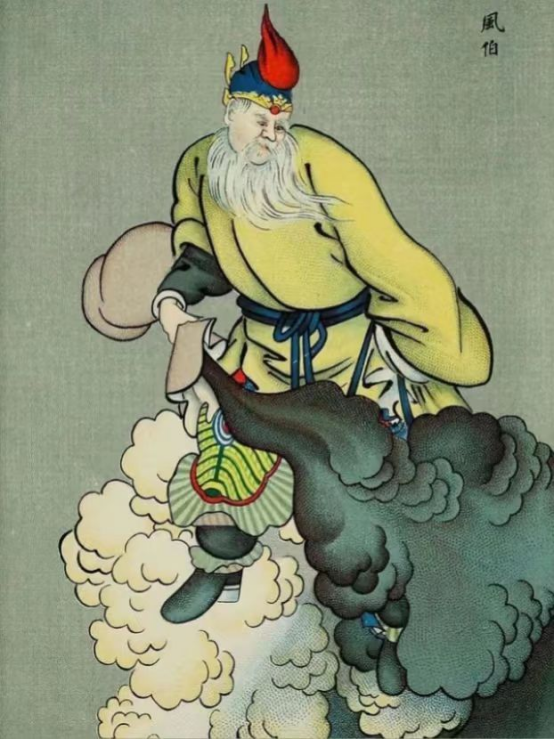
Image Characteristics
The image of Fengbo evolved significantly over different historical periods, changing from a mythical beast into a dignified Taoist celestial deity.
Ancient Mythological Form
Early Chinese texts such as Shan Hai Jing described Fengbo as:
- A lion-like creature with leopard patterns
- A bird-shaped head with a snake tail
- Strange horns growing from the head
- A divine beast capable of flying through the winds
Some ancient commentaries on Chu Ci portrayed him as a hybrid beast with the body of a bird and the head of a lion, emphasizing the mysterious and untamable nature of wind itself.
Taoist Celestial Form
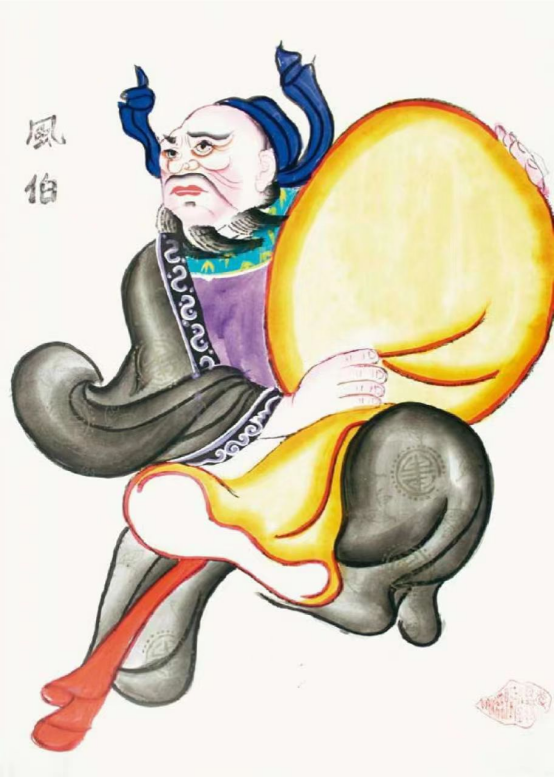
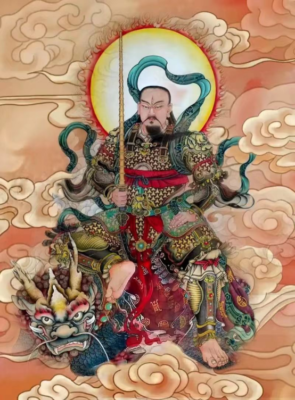
Later Taoist traditions transformed Fengbo into a more humanized divine official. He was commonly depicted as:
- An elderly man with white hair
- Holding a wind wheel in one hand
- Carrying a feather fan or wind bag
- Wearing flowing Taoist robes with a calm expression
The symbolic wind bag represented his ability to “stir the winds of heaven and nurture all things.”
His appearance in Taoist iconography shares similarities with other celestial officials connected to weather and natural forces, including the Five Directional Thunder Emperors, who collectively govern cosmic balance through the Five Elements and directional energies.
Cultural Significance
Guardian of Agricultural Civilization
The worship of Fengbo reflected ancient China’s deep dependence on natural weather cycles. Wind and rain directly affected harvests, making weather deities central figures within agricultural civilization.
Historical texts such as Zhou Li recorded official state sacrifices dedicated to Fengshi and Yu Shi, demonstrating their important status within ritual traditions.
Folk Worship and Taoist Temples
In Taoist temples, Fengbo was often worshipped together with weather deities including Lei Gong, Dian Mu, and Yu Shi inside Thunder Department halls.
Folk worshippers frequently prayed to Fengbo during storms and natural disasters, asking for peaceful weather, abundant harvests, and protection from destructive winds. Similar ritual practices can also be seen in traditions associated with the Five Marshals of the Thunder Ministry, who were believed to enforce heavenly order and suppress chaos.
Conclusion
Wind Lord Fengbo remains one of the most important weather deities in Chinese mythology and Taoist belief. As the controller of wind, climate, and seasonal transformation, he symbolizes both the power and harmony of nature.
From his ancient beast-like origins to his later role as a Taoist celestial official, Fengbo reflects the evolving understanding of natural forces within Chinese religious culture. His legends and worship traditions continue to preserve the ancient belief in harmony between heaven, earth, and humanity.
Related Posts
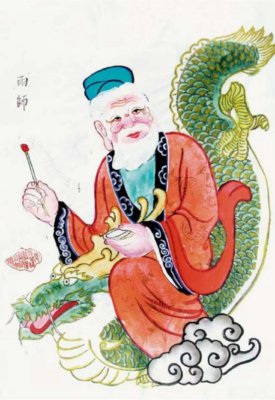
Rain Master (Rain God in Taoism)
Rain Master, also known as Rain God, Ping Yi, Xuan Ming, or Bi Xing, is [...]
Dec
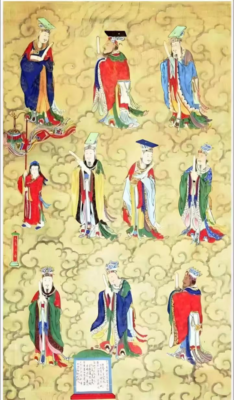
The Nine Chen Lords of the Divine Firmament
The Nine Chen Lords of the Divine Firmament in Chinese is 神霄九宸大帝(shén xiāo jiǔ chén [...]
Dec
Thunder Patriarch (Leizu): Jiutian Yingyuan Leisheng Puhua Tianzun
The Thunder Patriarch (雷祖, Leizu), formally known as Jiutian Yingyuan Leisheng Puhua Tianzun (九天应元雷声普化天尊), is [...]
Dec