The “Three Pure Ones” in Taoism refer to the three highest-ranking deities in Taoism, collectively known as “虚无自然 大罗三清三境三宝天尊(Xu Wú Zì Rén Dà Luó Sān Qīng Sān Jìng Sān Bǎo Tiān Zūn)”. They are respectively the Jade Clear Supreme Deity, the Upper Clear Spirit Treasure Deity, and the Great Clear Moral Deity. They reside in the Jade Clear Holy Realm, the Upper Clear True Realm, and the Great Clear Celestial Realm respectively, and are collectively referred to as the “Three Pure Ones Realm”.
Origin and Historical Development of the Three Pure Ones
Early Taoism and the Deification of Laozi
In the late Eastern Han Dynasty, early Taoism primarily revered Laozi as the supreme deity. Over time, Taoist thinkers gradually transformed Laozi from a historical philosopher into a cosmic divine being. This theological evolution eventually led to the emergence of the Three Pure Ones system.
The development of Taoist cosmology later influenced many divine hierarchies, including the celestial governance concepts seen in The Thirty-Two Heavenly Emperors. That tradition also emphasized layered heavenly realms and cosmic administration.
Formation of the Three Pure Ones System
The earliest prototype of the Three Pure Ones appeared during the Southern Dynasties in Tao Hongjing’s True Spirit Position Diagram. However, the order and identities of the deities were still fluid at that time.
During the Tang Dynasty, the theology became standardized. Taoist temples officially established the Three Pure Ones as the highest gods of Taoism. From then onward, nearly every major Taoist temple enshrined them in the central sanctuary.
Yuqing Yuanshi Tianzun — The Celestial Worthy of the Primordial Beginning
Supreme Origin of the Cosmos
Yuanshi Tianzun holds the highest rank among the Three Pure Ones. Taoist scriptures describe him as the primordial deity who existed before the separation of heaven and earth. He symbolizes the original source of creation and the beginning of all existence.
According to Ge Hong’s Zhen Zhong Shu, Yuanshi Tianzun resided in the Jade Pure Realm before the universe took shape. Taoists regard him as the ancestor of all deities and the embodiment of the primordial Dao.
His authority differs from later administrative gods because he represents the source of cosmic existence itself rather than governance alone. This theological distinction can also be observed when comparing him with The Jade Emperor, who governs the celestial bureaucracy but does not embody the primordial origin of the universe.
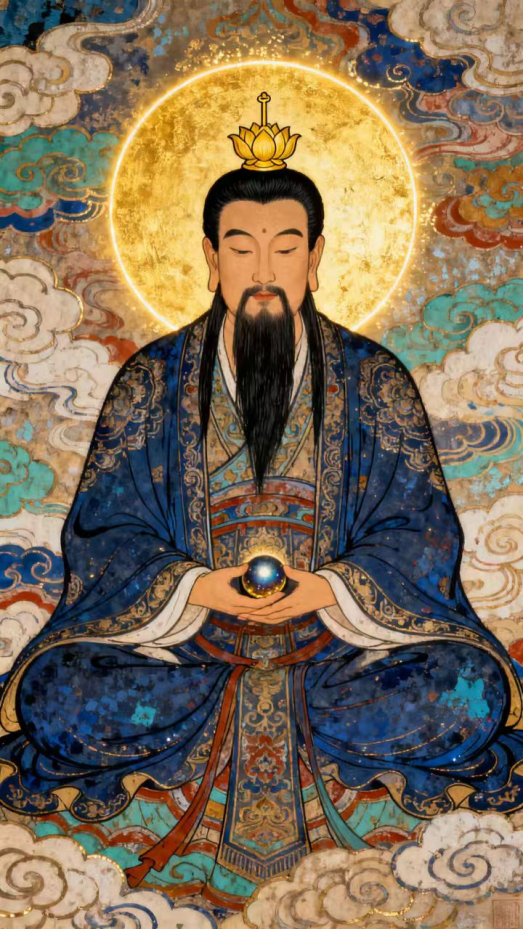
Shangqing Lingbao Tianzun — The Celestial Worthy of the Numinous Treasure
Master of Cosmic Transformation
Lingbao Tianzun emerged prominently during the Northern and Southern Dynasties alongside the rise of the Lingbao School of Taoism. Taoist scriptures describe him as being born from primordial qi and governing the operation of the cosmos after creation began unfolding.
He represents the evolutionary process of the Dao and the separation of yin and yang. Taoists believe that he oversees sacred scriptures, cosmic laws, and spiritual salvation.
The Lingbao tradition also contributed heavily to Taoist salvation rituals and heavenly cosmology. Similar ritual structures later appeared in traditions associated with The Supreme Lord Taiyi Who Saves the Suffering, especially in ceremonies focused on redemption and transcendence.
![Lingbao Tianzun sacred image]](https://taoist-world.com/wp-content/uploads/2025/12/image-201.png)
Taiqing Daode Tianzun — The Celestial Worthy of Dao and Virtue
Divine Manifestation of Laozi
Taiqing Daode Tianzun is the deified form of Laozi. He represents the manifestation of the Dao within the human world and teaches beings how to cultivate virtue and harmony.
Unlike Yuanshi Tianzun, who symbolizes the origin of existence, Taiqing Daode Tianzun focuses on applying the Dao in daily life. Taoist teachings associate him with moral cultivation, compassion, balance, and spiritual refinement.
Because of this earthly teaching role, his influence extends deeply into Chinese philosophy and culture. Many Taoist moral teachings, alchemical traditions, and cultivation practices originate from doctrines connected to him.
Some Taoist cosmological interpretations also connect his teachings to the balance of the Five Elements discussed in The Five Elders of the Five Directions, where cosmic harmony and elemental order remain central themes.
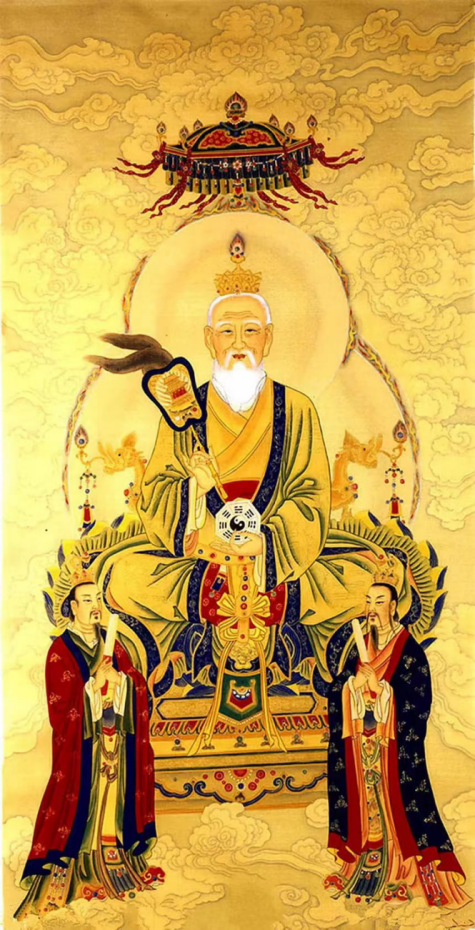
The Theology of “One Qi Transforming into Three Pure Ones”
Three Manifestations of the Dao
During the Tang and Song dynasties, Taoist scholars proposed the doctrine of “One Qi Transforming into the Three Pure Ones.” This theology explained that the three deities were not separate gods in conflict with one another. Instead, they represented different manifestations of the same primordial Dao.
- Yuanshi Tianzun symbolizes the essence of the Dao
- Lingbao Tianzun symbolizes the transformation of the Dao
- Daode Tianzun symbolizes the teaching and practice of the Dao
This interpretation aligned perfectly with the Taoist cosmological principle that “the Dao gives birth to all things.”
In Taoist temples, the Three Pure Ones are traditionally arranged with Yuanshi Tianzun in the center, Lingbao Tianzun on the left, and Daode Tianzun on the right. This arrangement remains the standard layout in Taoist worship halls today.
Religious Influence and Cultural Importance
Supreme Authority in Taoism
The Three Pure Ones occupy the highest position in the Taoist pantheon. Their realms transcend ordinary heavens, celestial bureaucracies, and underworld systems. Even powerful deities governing thunder, salvation, or cosmic administration ultimately derive authority from the Dao represented by the Three Pure Ones.
This elevated theological status distinguishes them from divine rulers associated with specific cosmic functions. Their role is not limited to judgment, protection, or salvation alone. Instead, they embody the metaphysical foundation of existence itself.
Lasting Influence on Chinese Culture
The Three Pure Ones deeply influenced Chinese religion, philosophy, temple architecture, literature, and ritual practices. Their imagery appears in Taoist murals, sacred statues, ceremonial texts, and spiritual cultivation manuals across East Asia.
For Taoists, worshiping the Three Pure Ones symbolizes returning to the original Dao, harmonizing body and spirit, and seeking unity with the cosmic order. Their theology remains one of the most important foundations of Taoist belief today.
Related Posts
The Thirty-Two Heavenly Emperors
Introduction The Thirty-Two Heavenly Emperors are the supreme rulers of the Thirty-Two Celestial Realms described [...]
Dec
The Nine Chen Lords of the Divine Firmament
The Nine Chen Lords of the Divine Firmament in Chinese is 神霄九宸大帝(shén xiāo jiǔ chén [...]
Dec
The Thirty-Six Heavenly Generals in Taoism: Guardians of Thunder, Exorcism, and Celestial Justice
The Thirty-Six Heavenly Generals are one of the most important groups of martial guardian deities [...]
Dec