In the Taoist underworld system, Heibai Wuchang (Black and White Impermanence) are the professional soul-catching envoys who serve under the Fengdu Emperor and the Ten Yama Kings. They hold a higher rank than ordinary underworld guards and function as the core messengers connecting the mortal world with the realm of the dead.
These two spirit officials always appear together. One guides virtuous souls peacefully, while the other captures criminals and wandering spirits. Together, they escort the dead into the underworld for judgment and maintain order between life and death.
Because of their unique appearance and moral symbolism, Heibai Wuchang (Black and White Impermanence) became some of the most recognizable figures in Taoist and Chinese folk religion.
Origins and Identity
In Taoist folklore and religious tradition, the two spirit envoys possess individual identities and stories.
White Impermanence (Xie Bian)
White Impermanence, commonly associated with Xie Bian, symbolizes reward, safety, and fortune. Folk legends describe him as a mortal scholar who drowned after refusing to abandon an important promise during heavy rain.
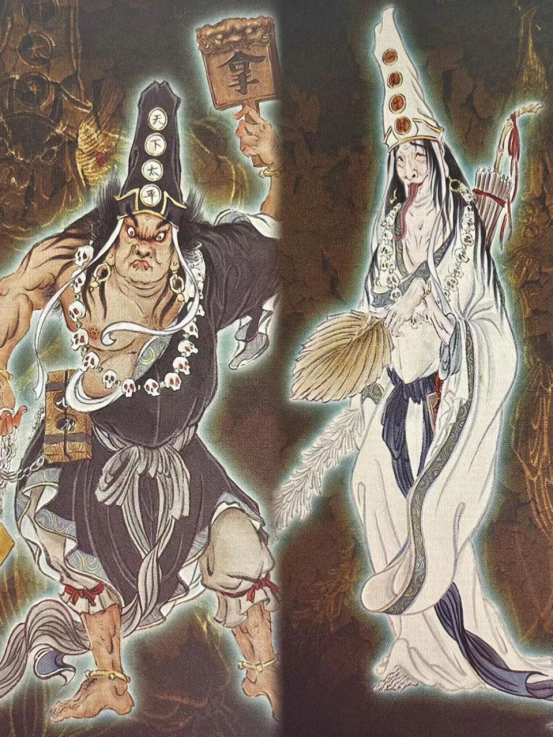
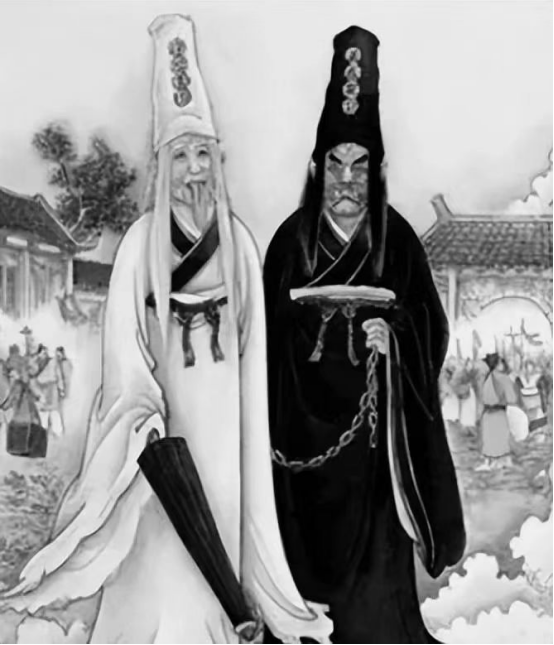
After death, the underworld appointed him as a spirit envoy because of his loyalty and integrity. He is traditionally portrayed as tall and thin with a pale face, wearing a white robe and a tall hat displaying phrases connected with fortune and spiritual reward.
Unlike many underworld spirits, White Impermanence appears gentle and approachable. Taoist belief often associates his appearance with protection and blessings.
Modern discussions of Heibai Wuchang as Chinese underworld reapers continue to explore their evolution from folk legends into widely recognized spiritual figures in East Asian culture.
Black Impermanence (Fan Wujiu)
Black Impermanence, associated with Fan Wujiu, symbolizes punishment and karmic justice. According to legend, he was the companion of Xie Bian. After discovering his friend’s death, he fell into despair and eventually ended his own life.
The underworld later transformed him into a spirit-catching envoy alongside White Impermanence. His image is severe and intimidating. He usually appears with dark skin, bulging eyes, shackles, and heavy iron chains.
His role focuses on apprehending evil souls and suppressing dangerous spirits that threaten both the living and the dead.
The punishment and escort system of the underworld also appears in Niu Tou Ma Mian.
Physical Appearance and Symbolism
The appearance of Heibai Wuchang (Black and White Impermanence) became deeply rooted in Taoist ritual art, temple murals, folk opera, and ghost festival traditions.
White Impermanence wears white official robes and carries a summoning banner or mourning staff. His expression often contains an unusual smile, symbolizing the peaceful reception of virtuous souls.
By contrast, Black Impermanence wears dark official robes and carries iron chains or shackles used to capture sinful spirits. His stern expression reflects punishment, discipline, and the fear associated with karmic consequences.
Although both figures appear frightening, Taoist belief does not portray them as purely evil entities. Instead, they represent balance within the cosmic order between reward and punishment.
Core Duties of Black and White Impermanence
Guiding Souls to the Underworld
The primary responsibility of Heibai Wuchang (Black and White Impermanence) is soul escorting. They receive orders from underworld judges and travel to the mortal world once a person’s lifespan has ended.
After capturing or guiding the soul, they escort it through the Yellow Spring Road and toward the courts of judgment. Throughout this journey, they prevent spirits from escaping or being disturbed by wandering ghosts.
The structure of underworld judgment is explored further in Ten Yama Kings of the Underworld.
Suppressing Evil Spirits
In addition to guiding the dead, Heibai Wuchang (Black and White Impermanence) also suppress harmful spirits in the human world. Folk traditions believe their images can ward off evil influences and protect households from spiritual disturbances.
Because of this belief, their images sometimes appear in temples, ritual paintings, and ghost-related ceremonies intended to restore spiritual balance.
Warning Humanity About Karma
The symbolic meaning of Heibai Wuchang (Black and White Impermanence) extends beyond the underworld itself. Their names and appearances serve as moral warnings connected with Taoist teachings about karma and ethical behavior.
White Impermanence encourages virtue and kindness, while Black Impermanence reminds people that harmful actions eventually lead to punishment.
This moral structure reflects the Taoist concept that good and evil inevitably produce consequences across both mortal life and the afterlife.
Position Within the Taoist Underworld
Within the Taoist underworld hierarchy, Heibai Wuchang (Black and White Impermanence) rank above ordinary ghost soldiers and prison guards. Their authority comes directly from the underworld courts and senior deities such as the Fengdu Emperor.
Unlike lower-level enforcers, they specialize in soul apprehension, escort duties, and spiritual investigation. This professional role distinguishes them from many other underworld beings.
The administrative structure of the Taoist underworld is further explained in The True Spirits of the Six Heavenly Palaces in Luofeng.
Folk Belief and Cultural Influence
Heibai Wuchang (Black and White Impermanence) became extremely influential in Chinese literature, folk stories, temple festivals, and theatrical traditions during the Tang and Song dynasties.
Many communities viewed them with both fear and respect. People believed they punished only the guilty and never harmed innocent souls unjustly. Therefore, they were often seen as fair messengers of cosmic justice rather than evil demons.
During ghost festivals and underworld rituals, worshippers sometimes prayed to Heibai Wuchang (Black and White Impermanence) for protection, peaceful passage for deceased relatives, and the removal of harmful spirits.
Their enduring popularity continues to reflect traditional Chinese beliefs about morality, death, and the balance between justice and mercy.
In modern folk culture, some believers also associate Black and White Impermanence with protection and wealth symbolism, especially in ritual art and spiritual accessories.
Related Posts
All the Sages of Fengdu: Taoist Netherworld Deities and Their Roles
The Sages of Fengdu are a collective group of deities and spiritual officials within the [...]
Dec
The True Spirits of the Six Heavenly Palaces in Luofeng
Also known as the Immortals of the Six Heavenly Palaces, the True Spirits of the [...]
Dec
Hades Great Emperor: Supreme Ruler of the Taoist Underworld
The Hades Great Emperor, also known as the Fengdu Emperor or the Northern Yin Emperor, [...]
Dec