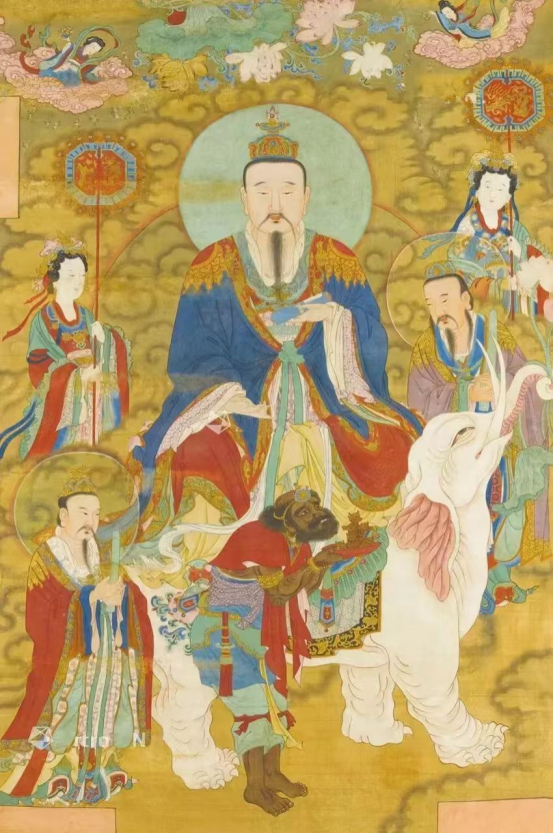
Dongwanggong, also known as Mu Gong, Eastern Heavenly Lord, or the Eastern King Father, is one of the highest-ranking deities in Taoism and Chinese mythology. He governs the East, embodies yang energy, and presides over all male immortals. As the divine counterpart to Xiwangmu, he represents the cosmic principle of yang, while she embodies yin; together, they maintain the harmony and balance of the universe.
His worship reflects the Taoist understanding of duality, cosmic order, and the continuous renewal of life.
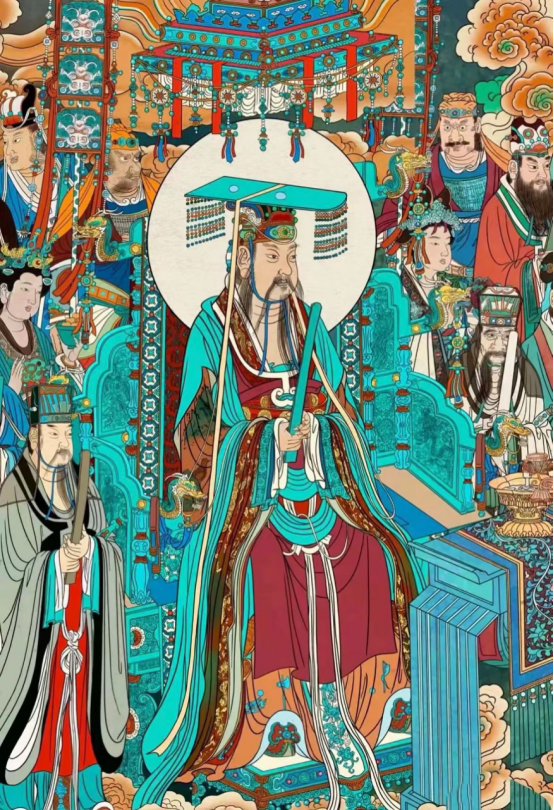
Origins and Evolution of Dongwanggong
The origins of Dongwanggong can be traced back to ancient Chinese worship of the eastern direction and the rising sun. Early texts such as Shen Yi Jing described him as a mysterious deity dwelling in a stone chamber, possessing a human body with symbolic mythical features.
As Taoism developed, this early divine figure was elevated into a supreme celestial ruler known as the Eastern Huadu Zufu Shaoyang Emperor, governing the force of yang and supervising the ascension of male immortals.
Over time, his identity also merged with patriarchal traditions in Quanzhen Taoism, strengthening his importance within the Taoist pantheon.
His symbolic role as the source of cosmic vitality closely aligns with the Five-Element worldview described in Fire Ministry Emperor, where yang energy and seasonal transformation govern life and renewal.
Divine Authority and Core Functions
Guardian of the East and Yang Energy
Dongwanggong governs the East, which symbolizes sunrise, spring, growth, and rebirth. He represents the emergence of life and the active, expanding force of the universe.
As the embodiment of pure yang, he regulates cosmic vitality and supports the harmonious circulation of heavenly energy.
Lord of Male Immortals
In Taoist belief, all enlightened male immortals must first present themselves before Dongwanggong at the Eastern Huadu Zufu. There, he evaluates their spiritual achievements before allowing them to enter the celestial ranks.
This divine administrative role reflects broader Taoist ideas of sacred hierarchy and spiritual advancement, themes also explored in The Five Elders of the Five Directions.
Cosmic Partner of Xiwangmu
Dongwanggong and Xiwangmu together symbolize the balance of yin and yang. Their paired existence represents one of the clearest expressions of Taoist cosmology, demonstrating that universal harmony depends on the interaction of complementary forces.
Role in Folk Belief and Taoist Culture
Although Dongwanggong is less widely worshiped among the general public than his western counterpart, he remains an essential figure in Taoist theology.
In some folk traditions, he is also believed to grant longevity, protect descendants, and bless family prosperity.
His enduring significance reflects the deeper Taoist teachings introduced in What Is Taoism? Understanding Taoist Philosophy and Daily Practice, where harmony with cosmic principles leads to spiritual and worldly balance.
Cultural Significance of Dongwanggong
Dongwanggong is more than a celestial ruler of the East. He is a profound symbol of yang, renewal, divine order, and the life-giving power of the universe.
His image embodies ancient Chinese reflections on cosmic rhythm and the eternal harmony between opposing yet complementary forces. Today, his worship continues in Taoist temples and traditional religious observances, preserving his place as one of the great sovereign deities of Taoism.
Related Posts
The Jade Emperor in Taoism: Supreme Ruler of Heaven and Cosmic Order
The Jade Emperor, whose full honorific title is “The Supreme Sovereign of the Heavenly Golden [...]
Dec
The Five True Lords of the Eastern Dipper in Taoism
Guardians of Destiny in the Eastern Heavens The Five True Lords of the Eastern Dipper [...]
Dec
The Tortoise and Serpent Generals in Taoism | Xuanwu Guardians of Water and Fire
Introduction The Tortoise and Serpent Generals are powerful guardian deities in the Taoist pantheon and [...]
Dec