
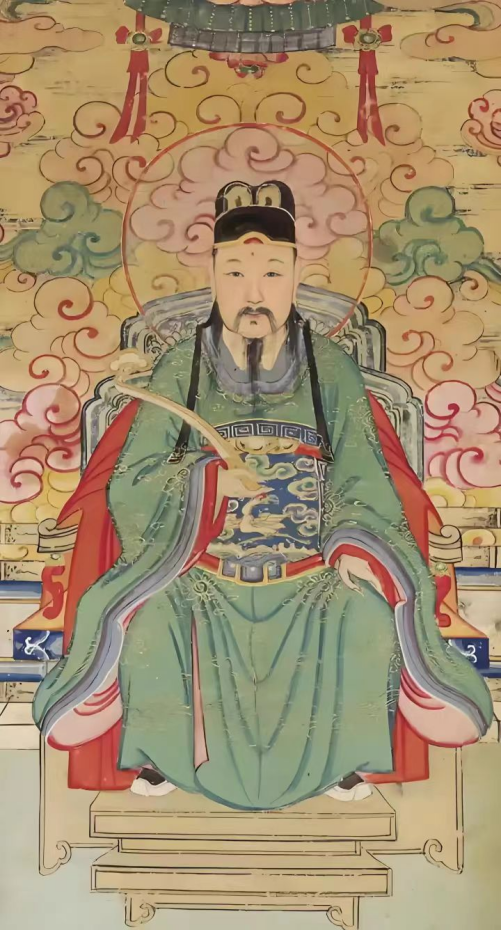
Lord Wenchang, also known as Emperor Wenchang, is the supreme Taoist deity governing literature, examinations, fame, official promotion, and scholarly achievement. He is widely worshipped by scholars, students, civil officials, and literati throughout Chinese cultural history, earning the titles “God of Imperial Examinations” and “Lord of Literary Fortune.”
Within Taoist belief, Lord Wenchang is deeply connected to celestial star worship and literary destiny. His authority over academic success also links him to the astral deity system represented by the Eleven Luminaries True Lords, whose celestial influences govern fate, knowledge, and cosmic order.
Origins of Lord Wenchang
Astral Origins
The earliest form of Wenchang worship originated from the ancient “Six Stars of Wenchang,” located near the Big Dipper constellation. Ancient Chinese astronomy believed these stars governed literary talent, official rank, wisdom, and scholarly fortune.
This association between stars and destiny reflects the broader Taoist cosmology also seen in the Twenty-Eight Mansions , where celestial movements were believed to directly influence human affairs, governance, and spiritual fortune.
The Zitong Deity Tradition
Another major origin comes from the local Sichuan deity Zhang Yazi, who was worshipped as the protector god of Zitong. Over time, the imperial court merged this regional cult with the celestial Wenchang star belief.
During the Song and Yuan dynasties, the deity was officially canonized as “Emperor Wenchang,” becoming the nationally recognized patron deity of scholars and examinations.
Divine Functions of Lord Wenchang
Master of Examinations and Official Success
Lord Wenchang presides over imperial examinations, academic achievement, literary talent, and career advancement. For centuries, students prayed to him before major examinations, hoping for wisdom, clear thinking, and success.
His role in governing scholarly hierarchy and literary rank is closely connected with celestial administrative deities such as the Three Terraces Lords, who are associated with official promotion, bureaucratic authority, and heavenly administration.
Guardian of Literary Fortune
Beyond individual examinations, Lord Wenchang also governs cultural prosperity, education, and the transmission of knowledge. Temples dedicated to him were often constructed near academies, schools, and examination halls.
In traditional belief, flourishing literary culture within a region was considered evidence of Wenchang’s blessing.
Recorder of Moral Conduct
Taoist traditions teach that Lord Wenchang maintains heavenly records of human virtue and misconduct. Academic success was therefore believed to depend not only on intelligence, but also on morality and accumulated merit.
This moral dimension is strongly emphasized in texts such as The Treatise on the Hidden Virtues of Emperor Wenchang, which teaches that hidden good deeds attract heavenly blessings.
Iconography of Lord Wenchang
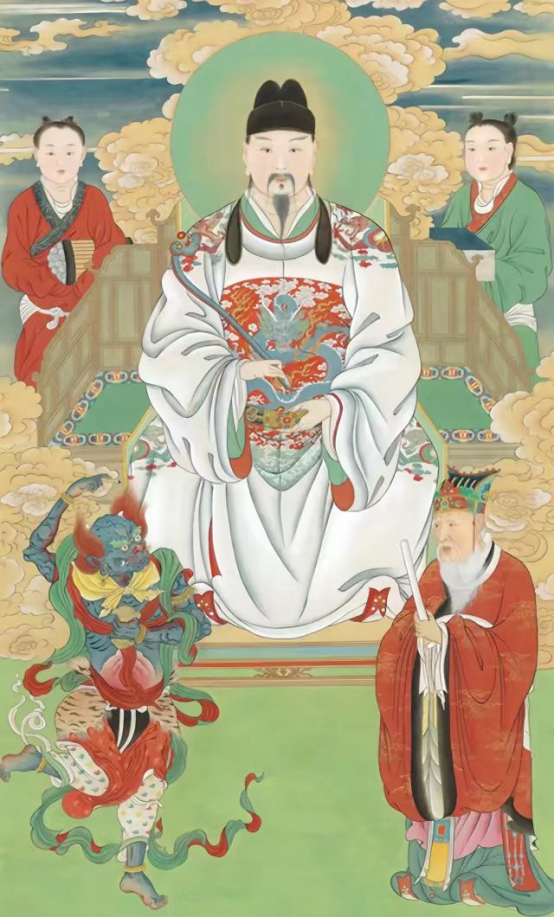
Lord Wenchang is usually portrayed as an elegant imperial official or wise scholar dressed in refined robes, holding a ruyi scepter or jade tablet symbolizing authority and wisdom.
He is often accompanied by Tianlong and Diya, Wenchang’s attendants, also known as Heaven-deaf and Earth-mute.
These attendants symbolize secrecy and heavenly mystery, reflecting the ancient belief that examination outcomes and divine decrees must not be casually revealed.
Use descriptive alt text such as:
- “Lord Wenchang Taoist deity portrait”
- “Wenchang Emperor Chinese god of literature”
Worship and Cultural Influence
The worship of Lord Wenchang became a central component of the traditional Chinese education system. Across China, people built:
- Wenchang Palaces
- Wenchang Pavilions
- Wenchang Towers
Before imperial examinations, scholars commonly visited temples to offer incense and pray for success.
His birthday, celebrated on the third day of the second lunar month, remains an important folk religious festival known as the “Wenchang Festival.”
Cultural Significance of Lord Wenchang
Lord Wenchang represents the fusion of morality, education, destiny, and heavenly authority within Chinese civilization. He embodies the traditional ideal that diligent study, ethical behavior, and heavenly blessing together determine success.
Together with Confucius, he formed the dual spiritual pillars of traditional Chinese scholarship:
- Confucius represented moral education and human wisdom
- Lord Wenchang represented heavenly destiny and divine literary fortune
As a result, Lord Wenchang became one of the most influential deities in Chinese intellectual and educational culture.
Related Posts
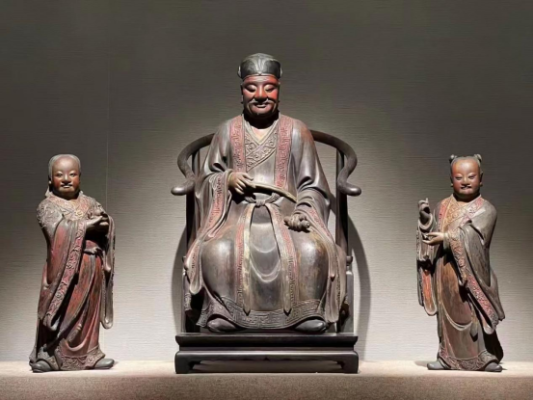
Tianlong and Diya: Wenchang’s Paired Attendants
Tianlong and Diya are the paired attendants of Wenchang, a deity associated with literature and [...]
Dec
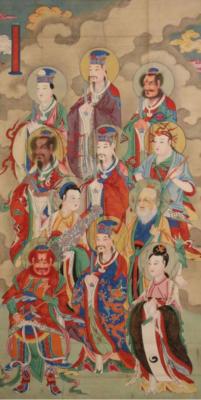
Eleven Luminaries True Lords in Taoism
Introduction to the Eleven Luminaries True Lords The Eleven Luminaries True Lords are important celestial [...]
Dec
Folk Deities in Taoism and Chinese Folk Religion
Folk deities are one of the most widespread parts of Chinese religious culture. Unlike the [...]
Dec