
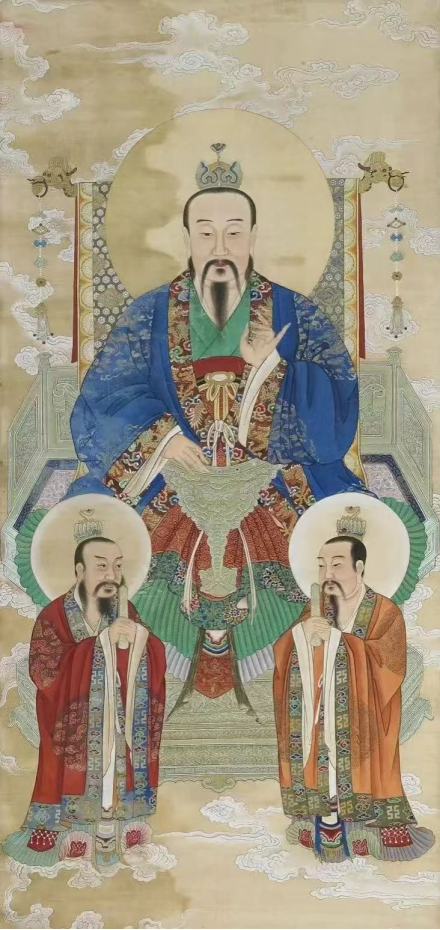
The Master of the Three Caverns is one of the highest religious titles in Taoism. Taoist tradition grants this title only to senior masters who fully inherit the scriptures, talismans, rituals, and teachings of the Three Caverns system. The title represents supreme authority in Taoist theology, ritual practice, and spiritual cultivation.
Unlike ordinary Taoist priestly ranks, the Master of the Three Caverns symbolizes complete mastery of the three major Taoist scriptural traditions: Shangqing, Lingbao, and Zhengyi.
Meaning of the Three Caverns
The “Three Caverns” form the classical classification system of Taoist scriptures and teachings.
Cavern of Perfection
The Cavern of Perfection mainly preserves the teachings of the Shangqing tradition. This school focuses on meditation, spirit visualization, inner cultivation, and the pursuit of immortality through qi refinement.
Some Taoist cultivation concepts within this system later influenced spiritual traditions connected to The Three Pure Ladies, especially ideas related to pure qi and transcendence.
Cavern of Mystery
The Cavern of Mystery centers on the Lingbao tradition. It emphasizes ritual ceremonies, salvation rites, and the spiritual liberation of sentient beings.
Large Taoist ceremonies for universal salvation often draw upon this ritual framework.
Cavern of Divinity
The Cavern of Divinity belongs primarily to the Zhengyi tradition, also known as Heavenly Master Taoism. It focuses on talismans, exorcism, ritual command of spirits, and communication with divine forces.
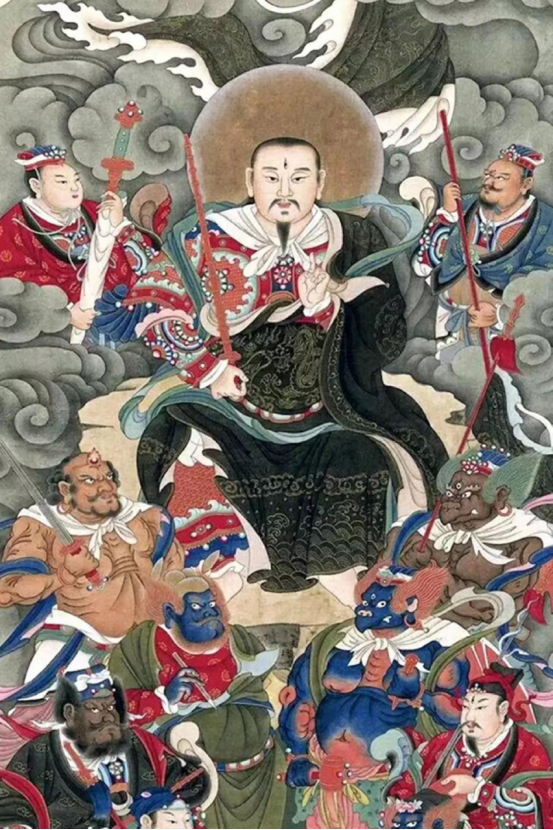
Many thunder rituals associated with deities such as The Ten Divine True Lords developed alongside this ritual system.
How a Master of the Three Caverns Is Recognized
Gradual Ordination Process
A Taoist priest advances through many levels of ordination over time. Early training begins with lower talisman registers and basic ritual authority. After years of cultivation, study, and service, the priest may receive higher-level ordination scriptures and sacred talismans.
Receiving the Three Caverns Scriptures
Senior Taoist authorities or the Celestial Master lineage formally confer the Three Caverns scriptures and registers upon qualified masters. This process confirms the priest’s legitimacy within orthodox Taoism.
The ordination also grants authority to perform advanced rituals, invoke celestial officials, and transmit Taoist teachings to future disciples.
Religious Functions and Authority
Leading Grand Taoist Rituals
Only masters of the highest rank can preside over major ceremonies such as the Golden Register Retreat and Yellow Register Retreat. These rituals pray for peace, national stability, disaster prevention, and salvation of wandering souls.
Preserving Taoist Lineages
The Master of the Three Caverns serves as a guardian of Taoist orthodoxy. They pass down sacred scriptures, ritual methods, and spiritual teachings to future generations.
Mastery of Multiple Ritual Traditions
Because they inherit all three scriptural systems, they combine meditation methods, ceremonial liturgies, and talismanic arts into one complete religious practice.
This broad authority places them above ordinary ritual priests and specialized high priests.
Difference Between a High Priest and a Three Caverns Master
An ordinary Taoist priest may study only one sect or ritual tradition. A High Priest (Gao Gong) usually acts as the chief officiant during a specific ceremony.
The Master of the Three Caverns, however, represents a permanent and much higher religious rank. These masters possess comprehensive authority across Taoist scriptures, rituals, and spiritual systems.
Historically, many Three Caverns Masters served as imperial advisors, national ritual leaders, and influential interpreters of Taoist doctrine.
Spiritual Importance in Taoism
The title of Master of the Three Caverns reflects the Taoist ideal of complete spiritual integration. By mastering scripture study, ritual practice, meditation, and divine communication, these masters embody the unity of Taoist wisdom and sacred authority.
Their role continues to symbolize the preservation of orthodox Taoist teachings and the continuity of Taoist spiritual traditions.
Related Posts
Introduction to the Procedure of the Dharma Assembly
Taoist dharma assemblies are among the most important ceremonial traditions in Taoism, combining scripture chanting, [...]
Dec
The Thirty-Two Heavenly Emperors
Introduction The Thirty-Two Heavenly Emperors are the supreme rulers of the Thirty-Two Celestial Realms described [...]
Dec
Basic Knowledge of Taoist Temples and Taoist Priests: Structure, Duties & Taoist Traditions
Introduction When people first visit a Taoist temple, they often notice the architecture, the incense, [...]
Dec