

Introduction
When people first bring home a Taoist ritual implement, they often focus on the moment of choosing it — the material, symbolism, craftsmanship, and tradition behind the piece.
What receives far less attention is what happens afterward.
How should a ritual implement be cleaned? How should it be stored? Can it be exposed to water, sunlight, incense, or other substances? And are there traditional practices for spiritually purifying an implement after it has been used?
These questions matter because ritual implements are not simply decorative objects. Within Taoist religious traditions, implements may have specific ritual functions and symbolic meanings, while their physical materials also require appropriate care.
This means caring for a ritual implement involves two different but complementary forms of attention:
- Physical maintenance, which protects the material, surface, craftsmanship, and structural integrity of the object.
- Spiritual or ritual purification, which may be practiced according to a person’s tradition, lineage, or devotional practice.
These two forms of care should not be confused. A silver ritual implement can be physically cleaned without performing a religious purification ritual, while a practitioner may also perform a devotional purification without altering the physical condition of the object.
This guide explains how to approach both aspects carefully, with particular attention to handmade Taoist ritual implements and the materials from which they are made.
Why Ongoing Care Matters
A ritual implement is often chosen because of its material, craftsmanship, symbolism, or connection to a particular Taoist practice.
That relationship does not necessarily end once the object has been purchased.
For practitioners, regularly handling an implement with care can become part of the discipline of practice itself. Cleaning dust from a ritual bell, carefully storing a talismanic object, or maintaining a set of prayer beads can all reinforce the attitude of attention and respect that accompanies religious practice.
This is particularly relevant when considering handmade ritual implements.
As we discussed in [Why Handmade Taoist Ritual Implements Matter: Tradition, Craftsmanship, and Spiritual Meaning], handmade objects can carry characteristics that distinguish them from mass-produced pieces — including variations in texture, engraving, finishing, and surface appearance. Why Handmade Taoist Ritual Implements Matter
Proper care therefore has two purposes.
First, it protects the physical object.
Second, it preserves the relationship between the practitioner and the implement.
From a Taoist perspective, this can be understood through the broader principle of maintaining harmony rather than forcing change. An implement does not need to remain perfectly new to remain meaningful. In many cases, natural signs of age can become part of its history.
Physical Maintenance by Material
Different ritual implements require different forms of physical care.
There is no universal cleaning method that is safe for every material. Water, polishing compounds, oils, salt, and chemical cleaners can all produce very different results depending on the object.
This is especially important for handmade pieces with engraved surfaces, patina, painted details, or mixed materials.
Bronze and Copper Alloys
Bronze and copper have been used for ritual objects for centuries, including bells, vessels, censers, and other ceremonial implements.
One of the most important things to understand about these metals is that a darker surface is not necessarily a sign that an object is dirty.
Copper alloys naturally develop patina as they age. Depending on the object and its intended appearance, this surface transformation may be considered part of its character.
For routine maintenance, gently removing dust with a soft brush or dry microfiber cloth is usually preferable to aggressive polishing.
Conservation guidance from the U.S. National Park Service similarly emphasizes caution when cleaning copper-alloy objects. Their conservation guidance warns against unnecessary polishing and notes that abrasive treatment can affect the surface of an object. U.S. National Park Service — Caring for Silver and Copper Alloy Objects
For this reason:
- avoid abrasive household cleaners
- avoid aggressive polishing
- never immerse a ritual object in water simply for convenience
- avoid allowing liquid to enter hollow handles or enclosed sections
- test any cleaning method on an inconspicuous area first
For valuable, antique, or historically significant implements, professional conservation is preferable to experimentation.
Silver
Silver is particularly attractive for ritual implements because of its brightness, durability, and ability to hold detailed engraving.
However, silver naturally tarnishes when exposed to compounds in the environment.
A lightly tarnished silver implement does not necessarily require aggressive polishing.
For routine care, a soft silver-polishing cloth can usually be used gently on exposed surfaces. Pay particular attention to engraved areas, as excessive rubbing can gradually soften fine surface details.
This is especially relevant for handmade silver pieces whose value may depend partly on detailed craftsmanship.
If you are unsure whether an object should be polished, it is better to remove loose dust first and inspect the surface before taking further action.
You can learn more about the traditional use of precious metals in ritual craftsmanship in [Why Taoist Ritual Implements Are Made from Precious Metals?].
Wood
Wooden ritual implements require a different approach.
Prayer beads, carved objects, wooden talismans, and other wooden implements can react to changes in humidity and temperature.
Long-term exposure to:
- direct sunlight
- excessive humidity
- extreme dryness
- standing water
may cause wood to discolor, crack, warp, or lose its original finish.
For routine maintenance, use a soft dry cloth and avoid soaking the object.
If the manufacturer or artisan specifically recommends an appropriate natural oil, a very small amount may sometimes be used to maintain the surface. However, oil should never be applied automatically to every wooden ritual implement because different woods and finishes behave differently.
For valuable handmade pieces, following the maker’s specific care instructions is the safest approach.
Jade and Stone
Jade and other stone implements are generally durable, but that does not mean they are completely resistant to damage.
For everyday cleaning, a soft slightly damp cloth is usually sufficient.
Avoid:
- harsh chemical cleaners
- abrasive powders
- rough brushes
- prolonged soaking
- unnecessary ultrasonic cleaning
Small scratches or surface changes may become particularly visible on polished stone.
As with other ritual implements, preservation should take priority over making an object look artificially new.
Mixed-Material Implements
Some modern ritual implements combine several materials — for example:
- silver and wood
- silver and stone
- metal and painted surfaces
- beads and metal fittings
- engraved metal with colored details
These pieces require extra caution because a cleaning method that is safe for one material may damage another.
When in doubt, clean the object according to the most delicate component.
This simple rule can prevent many unnecessary mistakes.
Spiritual Purification Practices

Physical cleaning and spiritual purification are not the same thing.
A ritual implement can be physically clean without having undergone a religious purification ceremony. Likewise, some practitioners may choose to perform a devotional purification without making any physical alteration to the object.
Formal Taoist purification practices vary according to tradition, temple, lineage, and ritual context.
Taoist ritual itself places considerable emphasis on purification and preparation. The Patheos overview of Taoist rites and ceremonies describes purification, invocation, consecration, offerings, chanting, and other ritual actions as parts of structured Taoist ceremonies. Patheos — Taoist Rites and Ceremonies
For everyday practitioners, however, it is important not to confuse a simple personal cleansing practice with a formal Taoist consecration ritual performed by a qualified religious specialist.
If an implement has already been formally consecrated, it is generally better to respect the instructions of the tradition or practitioner who performed the ceremony rather than inventing a new ritual.
Incense Purification
Incense is closely associated with Taoist ritual and devotional practice.
Some practitioners use incense smoke as part of a personal purification practice, allowing the smoke to pass around or near an implement while maintaining a respectful and focused state of mind.
The purpose is generally understood symbolically and ritually rather than as a physical cleaning method.
Incense should therefore never replace ordinary material care.
When using incense:
- keep the implement away from direct flame
- avoid exposing delicate materials to excessive heat
- ensure adequate ventilation
- prevent ash from accumulating on the object
- never leave burning incense unattended
The goal is to create a respectful ritual environment, not to expose the object to smoke unnecessarily.
Moonlight and Other Personal Purification Practices
Some contemporary practitioners use moonlight, particularly during a full moon, as a personal cleansing or renewal practice.
This should be understood as a devotional or folk practice rather than a universal requirement of Taoist ritual.
If you choose to use moonlight as part of your personal practice, the physical material of the object should still come first.
For example, prolonged exposure to strong outdoor humidity or dew may be more harmful to a wooden implement than any symbolic benefit gained from leaving it outside overnight.
A simple solution is to place the object indoors near a clean window rather than leaving it exposed to the elements.
Sound Purification
Sound also has an important place in Taoist ritual culture.
Bells, ritual instruments, chanting, and other forms of sound are used in structured ceremonies. The sound of a ritual bell, for example, can mark transitions within a ceremony and contribute to the creation of a sacred ritual environment.
Some practitioners also use sound symbolically when refreshing a personal spiritual space or ritual implement.
Again, however, this should be understood as a personal or devotional practice rather than a universal Taoist cleaning requirement.
The physical object does not need to be struck directly.
A bell can simply be sounded nearby while the practitioner maintains a calm and respectful state of mind.
Salt Water: Use With Caution
Salt water is sometimes recommended in modern spiritual cleansing practices, but it should not be treated as a universal method for Taoist ritual implements.
Salt and water can damage:
- untreated wood
- certain metals
- porous stones
- painted surfaces
- delicate engravings
- mixed-material objects
For this reason, salt water should generally be avoided unless you know that the specific material can safely tolerate it and that the practice is appropriate within your tradition.
When there is any doubt, a simple dry physical cleaning combined with a tradition-appropriate devotional practice is safer.
How Often Should You Cleanse a Ritual Implement?

There is no universal Taoist rule requiring every ritual implement to be spiritually cleansed on a fixed schedule.
The appropriate frequency depends on:
- the type of implement
- how frequently it is used
- whether it participates in formal rituals
- the practitioner’s religious tradition
- the material of the object
- instructions given by a teacher or temple
For physical maintenance, the simplest principle is:
Clean when necessary, not simply because a calendar says you should.
For spiritual or devotional purification, some practitioners may choose to do so:
- after significant ritual use
- when an implement has been handled in an environment they consider spiritually unsuitable
- during seasonal or religious observances
- when beginning a new period of practice
- according to instructions from their teacher or lineage
Consistency and respect are generally more meaningful than performing increasingly elaborate rituals without understanding their purpose.
Storage: Protecting an Implement Between Uses
Proper storage is one of the easiest ways to extend the life of a ritual implement.
A beautiful object can deteriorate surprisingly quickly when exposed to moisture, dust, direct sunlight, or careless handling.
Keep the storage area clean
A dedicated shelf, altar, cabinet, or storage box is preferable to a cluttered drawer filled with unrelated objects.
Avoid excessive moisture
Humidity can accelerate tarnishing in metals and cause problems for wooden objects.
Use breathable materials when appropriate
Cotton or silk pouches can be useful for many implements, particularly wooden or metal pieces.
However, storage materials should also be clean and dry.
Avoid unnecessary contact
If an implement has a delicate finish, painted surface, or detailed engraving, repeated contact with rough materials can gradually cause wear.
Keep implements elevated when appropriate
Traditionally significant objects are often kept on shelves or altars rather than directly on the floor.
For practitioners who maintain a dedicated altar, the altar can also provide a consistent place where an implement is returned after use.
Store different materials separately
Silver, wood, jade, bronze, and other materials can react differently to humidity and environmental conditions.
Separating delicate pieces can reduce accidental scratching and material interaction.
Caring for Handmade Ritual Implements at Taoist World
Proper care is especially important when an implement has been handmade.
Handmade objects are not necessarily supposed to remain visually identical to the day they were completed. Small changes in texture, patina, polishing, and surface appearance can become part of the object’s history.
This is one reason why understanding craftsmanship matters when purchasing a ritual implement.
As discussed in [How to Tell Handmade Taoist Ritual Implements from Machine-Made Ones], differences in material, finishing, engraving, surface treatment, and craftsmanship can help distinguish handmade work from mass-produced objects.
For Taoist World, the goal is not simply to create objects that look attractive when they are first purchased.
The intention is to create ritual and devotional pieces that can become part of a practitioner’s longer relationship with Taoist tradition.
Our Handmade Taoist Ritual Implements Collection brings together ritual objects made from different materials and created for different purposes.
Explore the collection:
⬇️Handmade Taoist Ritual Implements Collection⬇️
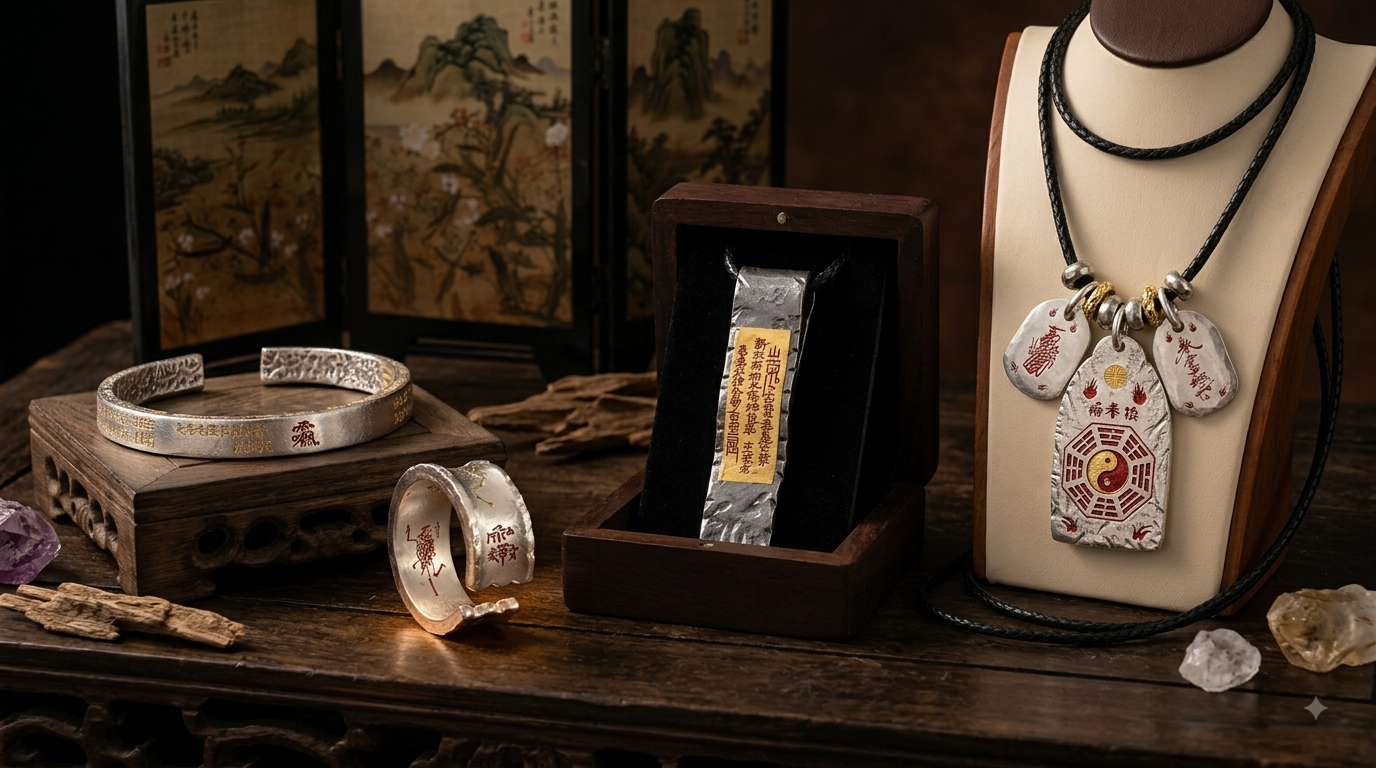
When caring for one of these pieces, the most important principle is simple:
Preserve the material, respect the craftsmanship, and follow the traditions appropriate to the implement.
Conclusion
Caring for a Taoist ritual implement is ultimately an extension of the same intention that led to choosing it in the first place.
Physical maintenance protects the material itself, while spiritual or devotional practices can provide a meaningful way for practitioners to maintain their relationship with an implement.
The two should not be confused.
A silver bell still needs appropriate silver care. A wooden prayer bead still needs protection from excessive moisture. A jade pendant still needs to be handled carefully. And a formally consecrated implement should be treated according to the traditions and instructions associated with its ritual lineage.
There is also no need to remove every sign of age.
Patina, subtle changes in wood, and other natural signs of use can become part of an object’s history.
Ultimately, the goal is not to preserve a ritual implement in a permanently untouched state.
It is to preserve its material condition, respect its craftsmanship, and maintain the meaning it holds within one’s practice.
Whether you are caring for an implement that has been part of your practice for years or learning how to maintain one for the first time, consistent attention is often the simplest and most meaningful form of care.
FAQ
The correct method depends primarily on the material. In general, begin with gentle physical cleaning using a soft, dry cloth or brush. Avoid harsh chemicals, abrasive polishing, and unnecessary exposure to water.
Not necessarily. Water can damage wood, certain metals, porous stones, painted surfaces, and mixed-material implements. Always consider the material before using water.
There is no single universal cleansing method for all Taoist traditions. Some practitioners use incense, sound, devotional practices, or other forms of purification according to their tradition. If an implement has been formally consecrated, follow the instructions associated with that tradition whenever possible.
Salt water should be used cautiously and is generally unsuitable for many materials, including untreated wood, certain metals, and porous stones. It should not be treated as a universal Taoist cleansing method.
Does a ritual implement need to be spiritually cleansed regularly?
There is no universal schedule. Physical cleaning should be performed when necessary, while spiritual purification depends on the practitioner’s tradition, ritual use, and personal practice.
Related Posts
How to Tell Handmade Taoist Ritual Implements from Machine-Made Ones: A Guide to Craftsmanship, Materials, and Authentic Detail
Introduction When people first shop for Taoist ritual implements, especially online, they often find that [...]
Aug
Why Handmade Taoist Ritual Implements Matter: Tradition, Craftsmanship, and Spiritual Meaning
Introduction When people first discover traditional Taoist ritual implements, one question often arises: Why are [...]
Aug
How to Choose a Taoist Ritual Implement: A Guide to Materials, Symbols, and Personal Practice
Introduction When people first encounter Taoist ritual implements, they often notice their beautiful craftsmanship, symbolic [...]
Aug