
The Nine Chen Lords of the Divine Firmament in Chinese is 神霄九宸大帝(shén xiāo jiǔ chén dà dì)
The Nine Chen Lords of the Divine Firmament, also known as Shenxiao Jiuchen, are the nine supreme deities worshipped within the Shenxiao Taoist tradition. They reside in the highest realm known as the Shenxiao Heaven and govern cosmic thunder, primordial qi, creation, destruction, and universal salvation.
Within Shenxiao Taoism, they represent the highest divine authority connected to thunder rituals and celestial law. Taoists regard them as rulers who supervise both heavenly order and the transformation of the universe through thunder and spiritual power.

Origins of the Shenxiao Jiuchen Belief
The belief in Shenxiao Jiuchen developed during the Song Dynasty alongside the rise of the Shenxiao School of Taoism. This tradition became famous for its thunder rites, talismanic practices, and celestial rituals used to dispel evil, heal illness, and restore cosmic balance.
Unlike ordinary Taoist celestial systems focused mainly on administration, the Shenxiao tradition emphasized primordial cosmic forces. Thunder was viewed not merely as punishment but as the origin of life and transformation itself.
The theological importance of cosmic directional forces can also be seen in The Five Elders of the Five Directions, which explains the Taoist understanding of universal elemental order.
Core Composition of the Nine Chen Lords
The Nine Chen Lords are centered around the High Ascended Shenxiao Yuching Zhenwang Longsheng Great Emperor, who serves as the supreme core deity of the system.
The remaining deities function as assistants and cosmic administrators who jointly govern the nine heavens.
Main Members of the Jiuchen Pantheon
- High Ascended Shenxiao Yuching Zhenwang Longsheng Great Emperor
- Dongji Qinghua Great Emperor
- Jiuyi Yingyuan Leisheng Puhua Tianzun
- Jiuyi Leishengzhu Great Emperor
- Shangqing Ziwudi Biyu Gongtai Taiyi Dachuang Emperor
- Liangti Dongyuan Great Emperor
- Liangbo Tianzhuo Emperor
- Ke Han Shizhuan Zhenjun
- Jiuyi Jinsheng Shengzun Zhenjun
Together, these deities form the highest thunder-centered divine system within Shenxiao Taoism.
Thunder and Cosmic Creation
Source of Universal Thunder
The Jiuchen deities govern all thunder phenomena, including lightning, storms, seasonal transformation, and the movement of celestial qi.
Shenxiao Taoism teaches that primordial thunder gave birth to heaven, earth, and all living things. Because of this belief, thunder represents both destruction and creation simultaneously.
The Taoist understanding of divine fire and celestial energy shares similarities with the cosmological role described in Fire Ministry Emperor, where sacred fire also functions as a force of purification and transformation.
Governance of Cosmic Cycles
The Nine Chen Lords supervise cosmic calamities and universal cycles of renewal. Taoist scriptures describe them as rulers who oversee transitions between eras and restore balance whenever disorder spreads throughout the world.
During times of spiritual decline, they are believed to reveal sacred teachings and guide humanity through disasters and transformation.
Salvation and Compassion
Among the Nine Chen Lords, Dongji Qinghua Great Emperor — commonly identified with Taiyi Jiuku Tianzun — possesses the primary role of salvation and spiritual redemption.
This gives the Jiuchen system both destructive authority and compassionate power. The deities not only punish evil but also rescue souls suffering within the three realms.
The Taoist doctrine of compassionate salvation is also closely connected with The Supreme Lord Taiyi Who Saves the Suffering, one of the most important deities associated with redemption and deliverance.
Supervising Heaven and Humanity
The Jiuyi Jinsheng Shengzun Zhenjun is responsible for inspecting the moral conduct of gods and humans across the three realms.
Taoists describe this deity as a cosmic-level celestial inspector who monitors virtue, wrongdoing, and spiritual corruption before reporting directly to the Nine Chen Lords.
This idea reflects the Taoist belief that heavenly law constantly observes the moral order of both the divine and mortal worlds.
The celestial bureaucracy associated with moral supervision also appears in All the Sages of Fengdu, where underworld officials preserve justice and cosmic order.
Position Within Shenxiao Taoism
Supreme Deities of the Shenxiao School
The Shenxiao School is famous for its thunder rites and thunder magic traditions. Taoist priests believed that successful thunder rituals required spiritual communication with the Nine Chen Lords, especially the Longsheng Great Emperor and the thunder deities.
Through meditation, talismans, chanting, and ritual ceremonies, practitioners sought harmony with celestial thunder forces.
Relationship with the Jade Emperor System
Within Shenxiao theology, the Nine Chen Lords are sometimes viewed as existing above the ordinary celestial administration governed by the Jade Emperor.
While the Jade Emperor supervises the Three Realms and heavenly bureaucracy, the Jiuchen deities represent deeper primordial powers connected directly to cosmic creation and universal law.
This distinction reflects the Shenxiao School’s attempt to establish a more expansive cosmological structure within Taoism.
Religious and Cultural Influence
The worship of the Nine Chen Lords became deeply influential within Taoist thunder rituals, exorcism ceremonies, and imperial religious traditions during the Song and Yuan dynasties.
Their imagery symbolizes divine authority, cosmic balance, celestial punishment, and universal renewal. In Taoist ritual culture, they remain among the most mysterious and powerful celestial groups associated with thunder law and heavenly transformation.
The Shenxiao Jiuchen belief also reflects the Taoist worldview that creation, destruction, punishment, and salvation are interconnected forces governed by higher cosmic order.
Related Posts
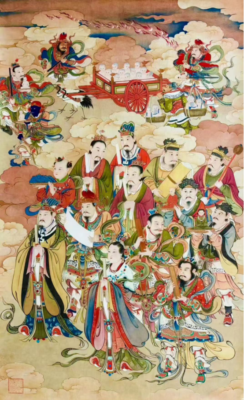
Nine Heavens Creator of Spirits in Taoism
The Nine Heavens Creator of Spirits is a divine system composed of nine celestial emperors [...]
Dec
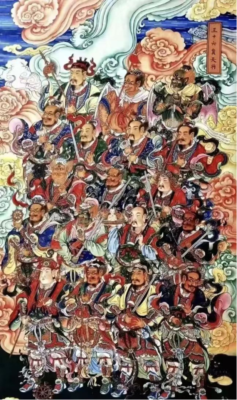
The Thirty-Six Heavenly Generals in Taoism: Guardians of Thunder, Exorcism, and Celestial Justice
The Thirty-Six Heavenly Generals are one of the most important groups of martial guardian deities [...]
Dec
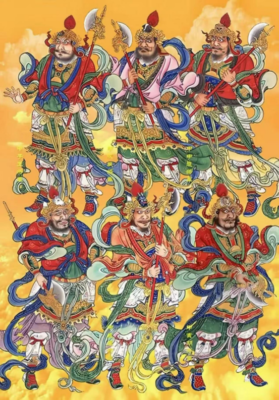
The Six Ding and Six Jia Generals in Taoism | Guardian Deities of Divine Protection
Introduction The Six Ding and Six Jia Generals are among the most important guardian deities [...]
Dec