
Introduction
When people first visit a Taoist temple, they often notice the architecture, the incense, and the quiet ceremony taking place — without necessarily understanding the structure behind what they’re seeing, or the tradition the priests conducting it belong to.
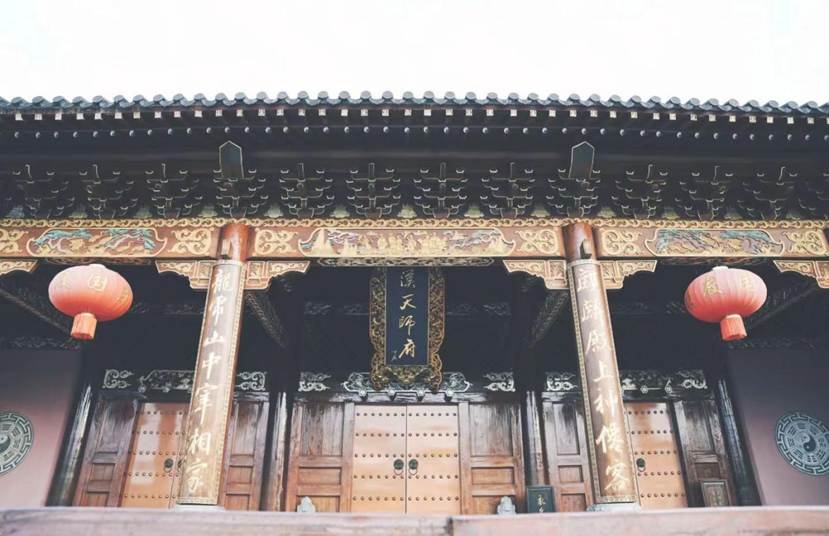
Taoist temples are sacred places where Taoist believers conduct religious activities, cultivate spiritually, study scriptures, and perform rituals. They are commonly called “gong” or “guan.” Generally speaking, “gong” usually refers to large imperial Taoist complexes built or supported by emperors, while “guan” refers to smaller temples or places of cultivation used by priests and local believers.
Taoist temples are not only religious centers but also important carriers of traditional Chinese culture, architecture, music, and philosophy — institutions that took shape alongside the broader history covered in our guide to the origin and development of Taoism.
This guide explores Taoist temples and priesthood by examining three key areas:
- what Taoist temples are for, and how they’re traditionally structured
- the two major Taoist sects, and how their approach to priesthood differs
- what daily life and training actually involve for a practicing Taoist priest
Core Functions of Taoist Temples
Religious Activities
Taoist temples host various religious ceremonies and rituals, including praying for blessings, warding off disasters, releasing souls from purgatory, scripture chanting, seasonal festivals, and deity birthday celebrations. Most formal Taoist sacrificial rituals are hosted by Taoist priests inside Taoist temples.
Places for Spiritual Cultivation
Taoist priests practice meditation, internal alchemy, scripture study, and quiet cultivation inside temples. Many temples are built in remote mountains or peaceful natural environments because Taoism values harmony between humanity and nature.
Cultural Preservation
Taoist temples preserve many important cultural treasures, including Taoist scriptures, statues and murals, ritual music, ancient architecture, and calligraphy and paintings. Today, many famous Taoist temples also serve as cultural heritage and tourist sites.
Typical Architectural Layout of Taoist Temples
Most Taoist temples follow a symmetrical design along a central axis, combined with traditional Feng Shui concepts.
Front Gate. The front gate symbolizes the entrance into the sacred Taoist world. It often contains Taoist plaques, guardian imagery, symbolic inscriptions, and traditional architectural carvings.
Lingguan Hall. This hall is usually located immediately after the entrance gate. It is dedicated to Wang Lingguan, the chief guardian deity of Taoism, who protects the temple from evil influences and guards the sacred grounds.
Sanqing Hall. The Sanqing Hall is the central and most important hall in most Taoist temples. It worships the Three Pure Ones, the highest deities in Taoism: Yuqing Yuanshi Tianzun, Shangqing Lingbao Tianzun, and Taiqing Daode Tianzun (Laozi). Major ceremonies and religious activities are held here.
Jade Emperor Hall. Some Taoist temples also include a hall dedicated to the Jade Emperor, ruler of the heavenly realms in Taoist cosmology.
Patriarch Hall. This hall honors important Taoist patriarchs and founders, including Zhang Daoling of the Zhengyi School and Wang Chongyang of the Quanzhen School.
Residential and Practice Areas. Taoist temples also include practical spaces such as scripture libraries, meditation rooms, alchemy rooms, dining halls, and living quarters for priests.、
Famous Taoist Temples in China
Some well-known Taoist temples include Louguan Tai in Shaanxi, Baiyun Temple in Beijing, Longhu Mountain Tianshi Mansion in Jiangxi, Qingcheng Mountain Tianshi Cave, and the Wudang Mountain temples in Hubei. These sacred sites played major roles in the historical development of Taoism.
Taoist Priests
Taoist priests are religious practitioners who follow Taoist doctrines, conduct rituals, cultivate spiritually, and preserve Taoist traditions. Male priests are traditionally called “Qian Dao,” while female priests are called “Kun Dao.” Temples primarily occupied by female Taoists are known as “Nu Guan.”
Major Taoist Sects
Zhengyi School
The Zhengyi School traces its origins back to Zhang Daoling during the Eastern Han Dynasty and is one of the oldest Taoist traditions. According to Wikipedia’s overview of Daoist schools, Zhengyi (“Orthodox Unity”) Dao traces specifically to the Celestial Masters tradition Zhang Daoling founded in 142 CE, and remains the principal non-monastic, public ritual variant of Daoism.
Zhengyi Taoist priests may marry and have families, live outside temples, and maintain ordinary social lives. Their practices focus heavily on ritual ceremonies, talismans, and communication with deities. Zhengyi priests commonly perform blessing ceremonies, exorcisms, funeral rituals, soul salvation rites, and talisman practices, remaining closely connected with everyday folk religious life.
Quanzhen School
The Quanzhen School was founded by Wang Chongyang during the Jin Dynasty. According to Britannica’s entry on Quanzhen, Wang founded the sect in 1163 after receiving what he described as secret teachings, establishing a monastery in Shandong to propagate the Way of Perfect Realization as a deliberate synthesis of Confucianism, Taoism, and Chan (Zen) Buddhism. This foundational difference in approach is explored further in our guide to Taoist philosophy versus Taoist religion.
Quanzhen Taoist priests generally live monastic lives, remain celibate, avoid meat and alcohol, and cultivate through meditation and internal alchemy. Quanzhen practice emphasizes cultivating body and spirit, meditation and tranquility, internal energy refinement, and self-discipline and moral cultivation. The school strongly values spiritual enlightenment and long-term cultivation.
Daily Duties of Taoist Priests
Scripture Study and Cultivation
Taoist priests study important classics such as the Tao Te Ching, Zhuangzi, and other Taoist cultivation scriptures. Daily practices include morning and evening chanting, meditation, breathing exercises, and internal alchemy training.
Religious Ceremonies
Priests conduct various ceremonies for believers, including blessing rituals, funeral rites, purification ceremonies, scripture chanting assemblies, and seasonal festivals. Professional Taoist priests are in charge of arranging and carrying out the whole Dharma Assembly procedure.
Temple Management
Priests also help maintain temple order, receive visitors, preserve scriptures, and pass down Taoist traditions to disciples.
Taoist Ethics, Titles, and Etiquette
Taoist priests follow moral precepts such as avoiding killing, avoiding theft, avoiding false speech, avoiding immoral conduct, and maintaining discipline and sincerity. Specific rules differ between Taoist sects and ordination levels.
Common titles for Taoist priests include Daozhang, Zhenren, and Zongshi. Inside Taoist temples, proper etiquette includes remaining respectful and quiet, avoiding loud behavior, and greeting through Taoist salutes and bows. Quanzhen priests may adopt special religious surnames after ordination to symbolize spiritual purity.
How to Become a Taoist Priest
Quanzhen Ordination. To become a Quanzhen priest, one usually must apprentice under a master, live in a temple, receive ordination, and complete long-term cultivation and training.
Zhengyi Ordination. Zhengyi priests may either live in temples or remain within ordinary society. After receiving official ordination registers (“Lu”), they gain the authority to conduct Taoist rituals and ceremonies.
Taoist Tradition at Taoist World
Taoist temples and Taoist priests form the living foundation of Taoist religious culture — institutions and traditions that have preserved sacred practice, architecture, and philosophy across nearly two thousand years.
At Taoist World, we draw inspiration from this same living tradition, believing that genuine appreciation for Taoist craftsmanship begins with understanding the temples, priests, and practices that have carried this heritage forward.
Explore more Taoist basics and culture: → Taoist Basics & Culture
Conclusion
Taoist temples and Taoist priests form the living foundation of Taoist religious culture. Temples preserve sacred traditions, scriptures, architecture, and rituals, while Taoist priests continue to pass down cultivation methods, ceremonial practices, and spiritual teachings that have shaped Chinese civilization for thousands of years.
Together, they represent the practical continuation of Taoist belief, philosophy, and religious life — from the symmetrical halls of a mountain temple to the daily discipline of the priests who maintain them.
FAQ
✓ What’s the difference between “gong” and “guan” temples? “Gong” generally refers to large imperial Taoist complexes historically built or supported by emperors, while “guan” refers to smaller temples or cultivation sites used by priests and local believers.
✓ What’s the main difference between Zhengyi and Quanzhen priests? Zhengyi priests may marry, live in society, and focus on ritual services for communities, while Quanzhen priests live monastic, celibate lives centered on meditation and internal cultivation.
✓ What is the Sanqing Hall? It’s the central and most important hall in most Taoist temples, dedicated to the Three Pure Ones — the highest deities in Taoism.
✓ What are Taoist priests called? Male priests are traditionally called “Qian Dao” and female priests “Kun Dao,” with temples primarily staffed by female Taoists known as “Nu Guan.”
✓ How long does it take to become a Taoist priest? It varies by sect, but generally involves apprenticing under a master, living in a temple, and completing long-term cultivation and training before formal ordination.
Related Posts
Introduction to the Procedure of the Dharma Assembly
Taoist dharma assemblies are among the most important ceremonial traditions in Taoism, combining scripture chanting, [...]
Dec
Taoist Consecration Ceremony: Meaning, Ritual Process, and Spiritual Power
Taoist consecration is a sacred ritual performed by qualified Taoist priests to invite divine spiritual [...]
Dec
The Thirteen Daoist Classics: Core Scriptures of Taoist Philosophy and Cultivation
Introduction When people first encounter Taoist scripture, they often assume the Tao Te Ching stands [...]
Dec