
Legend has it that Zhuge Liang once set up an altar at Wuzhangyuan to perform a ritual known as “star purification and life extension.” This ritual centered on offering sacrifices to the Big Dipper lamp.
It was believed that if the main lamp remained lit for seven days, one’s life could be prolonged. However, on the dawn of the seventh day, a sudden military emergency occurred. In the chaos, the lamp was accidentally extinguished.
Zhuge Liang sighed that life and death follow destiny, and soon after, he passed away.
This story later became the most well-known example of Taoist “Worship of the Dipper.”
What Is Taoist Worship of the Dipper?
“Worshiping the Dipper” refers to an ancient Taoist ritual practice of praying for blessings, extending life, and eliminating disasters through reverence for the celestial Dipper.
In traditional belief, the Southern Dipper governs birth, while the Northern Dipper governs death.
The Southern Dipper is associated with fortune, longevity, and prosperity. In contrast, the Northern Dipper governs fate, misfortune, and karmic consequences.
Therefore, Taoism developed structured rituals to honor these star deities and seek harmony between heaven and human life, a system further explained in Taoist sacrificial rituals.
The Structure of the Dipper Star System
According to Taoist scripture traditions, each group of stars has a distinct function:
- The Central Dipper preserves life
- The Western Dipper protects the body
- The Eastern Dipper records destiny
- The Southern Dipper extends lifespan
- The Northern Dipper resolves disasters and grants blessings
These celestial systems form a cosmic order that governs existence across heaven, earth, and humanity, reflecting the fundamental principles described in Qi and Yin-Yang
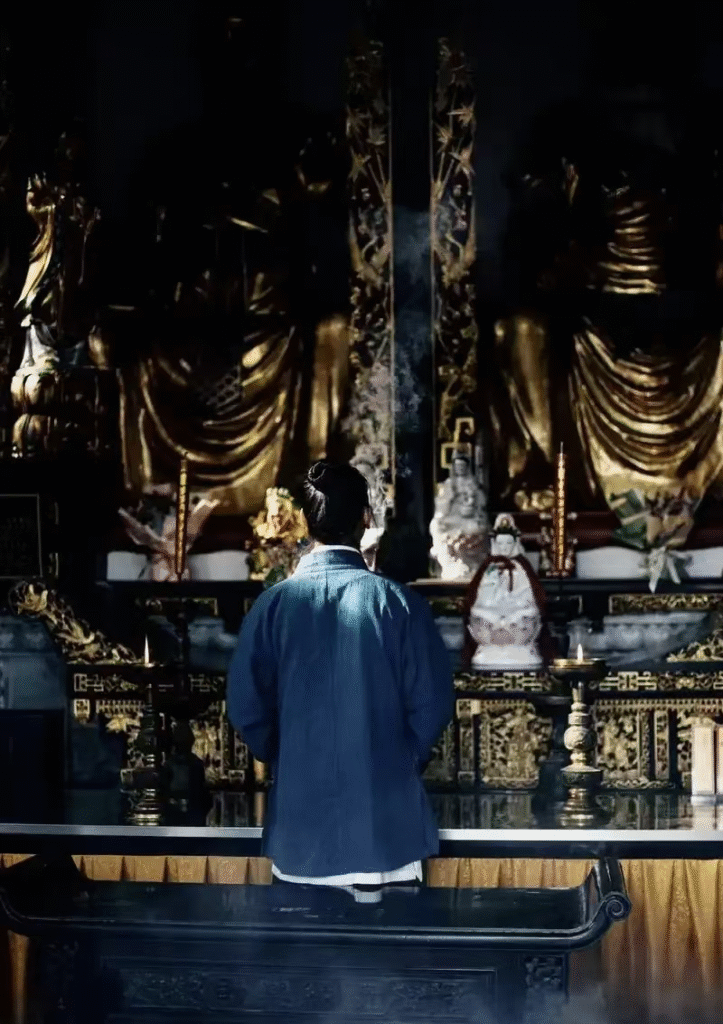
Historical Origins of the Ritual
The origins of Dipper worship can be traced back to ancient China, but it became systematized during the Han Dynasty.
Texts attributed to early Taoist traditions describe rituals involving fasting, purification, and offerings to the Dipper deities. These practices were believed to cleanse misfortune, transform destiny, and extend life.
Historical records show that not only Taoist priests but also scholars and officials participated in such rituals, reflecting its wide cultural influence.
Why Worshiping the Dipper Is Believed to Work
Taoism teaches that human life is closely connected to celestial systems. The Dipper is considered the “axis of heaven” and the origin point of destiny.
According to traditional belief, a person’s soul originates from the stars and ultimately returns to them.
Therefore, worshiping the Dipper is essentially a way of reconnecting with one’s original cosmic nature, a concept closely related to the principles found in The Five Elements Theory.
Modern scholarship also examines the religious and ritual significance of the Big Dipper in Taoist tradition (see The Daoist Big Dipper (Beidou) Tradition and Its Ritual Significance).
Through ritual sincerity and spiritual alignment, practitioners seek to:
- Eliminate karmic obstacles
- Attract blessings
- Harmonize destiny
Symbolism of the Dipper Lamp
From ancient altars to modern rituals, the Dipper lamp remains a central symbol.
It represents not only life force but also faith, sincerity, and reverence for the cosmos.
As long as the lamp remains lit, it symbolizes the continuity of life and the unwavering Taoist heart.
Modern Practice and Festivals
The period around the Double Ninth Festival is considered especially auspicious for Dipper worship.
During this time, Taoist temples hold rituals involving altar setup, lamp lighting, scripture chanting, and prayer petitions.
Participants may submit their names and birth details to be included in ritual registers, symbolizing their connection to celestial blessings.
Conclusion
Taoist Worship of the Dipper is more than a ritual—it is a symbolic system connecting human life with cosmic order.
By aligning with the stars, practitioners seek balance, longevity, and spiritual harmony.
Related Posts
Pray for Blessings in Taoism: Rituals, Deities, and Spiritual Meaning
Pray for blessings in Taoism is a traditional religious practice in which believers seek protection, [...]
Dec
Three Terraces Lords of Taoism: Guardians of Life, Fortune, and Longevity
Introduction The Three Terraces Lords (San Tai Xingjun) are highly important celestial deities within the [...]
Dec
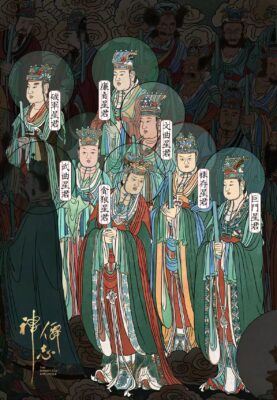
The Seven True Lords of the Big Dipper in Taoism
The Seven True Lords of the Big Dipper are among the most important astral deities [...]
Dec