
Mengpo: The Goddess of Forgetfulness in the Taoist Underworld
In Taoist belief, Mengpo is the underworld goddess who guards the Naihe Bridge and oversees the final stage before reincarnation. She serves beneath the Fengdu Emperor and the Ten Yama Kings, guiding deceased souls toward their next life. Her primary duty is to prepare and distribute Mengpo Soup, a mystical drink that erases memories from previous lives and allows souls to reincarnate without attachment or resentment.
Unlike the fierce ghost officers and stern judges of the underworld, Mengpo represents mercy, release, and renewal. Her image became one of the most recognizable symbols of reincarnation within Chinese folk religion and Taoist afterlife culture.
Origins of Mengpo
Stories about Mengpo appear in both Taoist belief and Chinese folklore. Different traditions describe her origins in different ways. However, three legends became especially popular throughout history.
The first legend claims that Mengpo existed since the creation of heaven and earth. According to this tradition, she understood the balance of yin and yang and later received an order from the Heavenly Emperor to reside in the underworld. Her task was to erase the memories of souls before reincarnation.
Another well-known story connects Mengpo with Meng Jiangnu. After witnessing immense suffering and grief in the mortal world, she chose to remain within the underworld and help souls forget their pain. Therefore, she began preparing the “Forgetfulness Soup” for wandering spirits.
A third legend describes Mengpo as an ordinary woman surnamed Meng. During her mortal life, she accumulated virtue and helped others selflessly. After death, the underworld deities appointed her as the guardian responsible for preparing the soup of forgetfulness.
These stories demonstrate how Taoist and folk traditions gradually blended together over time.
Modern interpretations of Meng Po as a goddess of forgetfulness and emotional release continue to appear in contemporary discussions of Chinese mythology and afterlife traditions.
Appearance and Symbols
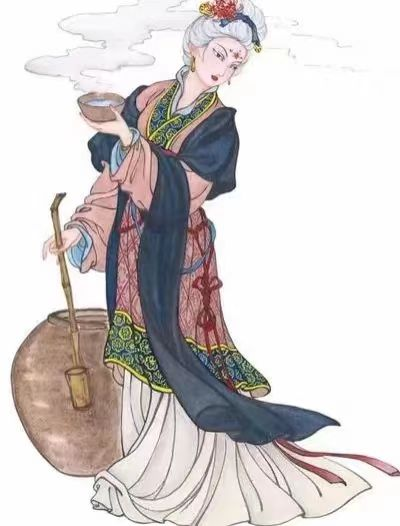
Mengpo is usually portrayed as a gentle woman wearing plain robes or gray clothing. She often appears beside a massive soup cauldron while holding a ladle and bowl. Her expression looks calm and compassionate rather than terrifying.

Traditional legends describe the ingredients of Mengpo Soup as coming from the waters of the underworld, the flowers of the other shore, and mystical herbs connected with forgetting sorrow. Although the soup appears clear and tasteless, it completely removes memories from previous lives.
She permanently resides beside the Naihe Bridge. One side of the bridge connects to the Yellow Spring Road, while the other leads toward reincarnation. Every soul crossing the bridge must drink the soup before entering the next cycle of existence.
The underworld escort system connected to wandering souls is also described in Niu Tou Ma Mian.
Duties Within the Underworld
Mengpo’s responsibilities extend beyond simply distributing soup. Before a soul receives Mengpo Soup, the underworld courts must first complete the judgment process and determine the soul’s next reincarnation path.
After judgment ends, Mengpo verifies the soul’s qualification for reincarnation. Only then may the spirit proceed across the Naihe Bridge. If a soul refuses to drink the soup, underworld ghost officers force compliance or impose additional punishment.
In addition, Mengpo comforts fearful or grieving souls and helps them release emotional attachments to their former lives. Taoist belief teaches that resentment carried across reincarnation could disturb both the mortal world and the spiritual realm.
The structure of reincarnation judgment is explained further in Ten Yama Kings of the Underworld.
Meanwhile, the broader administration of the Taoist underworld appears in Underworld Judge.
Mengpo in Folk Culture
In Chinese folk belief, Mengpo is often viewed as one of the kindest figures within the underworld. Unlike the violent punishments associated with hell guardians, her role focuses on peace and transition.
As a result, literary works, operas, and folk stories frequently portray Mengpo as a tragic yet compassionate figure who helps souls let go of sorrow before beginning a new existence. Her story also reflects the traditional Chinese belief that suffering should not continue forever across lifetimes.
Even today, artwork and community discussions surrounding traditional depictions of Mengpo in Chinese folk belief remain active across online spiritual and cultural communities.
Symbolism and Religious Meaning
Mengpo symbolizes forgetting, emotional release, and spiritual renewal. Her soup represents the separation between past and future lives. Without forgetfulness, souls would carry endless hatred, grief, and attachment into every reincarnation cycle.
Therefore, Mengpo plays an essential role in maintaining balance between the human world and the underworld. She ensures that reincarnation continues peacefully and that the cosmic order remains stable.
For many believers, Mengpo also represents hope. Although death ends one existence, her presence suggests that every soul may eventually begin again free from previous suffering.
Related Posts

Ten Yama Kings of the Underworld
The Ten Yama Kings are the ten rulers of the underworld in Taoism and folk [...]
Dec
Hades Great Emperor: Supreme Ruler of the Taoist Underworld
The Hades Great Emperor, also known as the Fengdu Emperor or the Northern Yin Emperor, [...]
Dec
All the Sages of Fengdu: Taoist Netherworld Deities and Their Roles
The Sages of Fengdu are a collective group of deities and spiritual officials within the [...]
Dec