Tag Archives: Chinese Philosophy

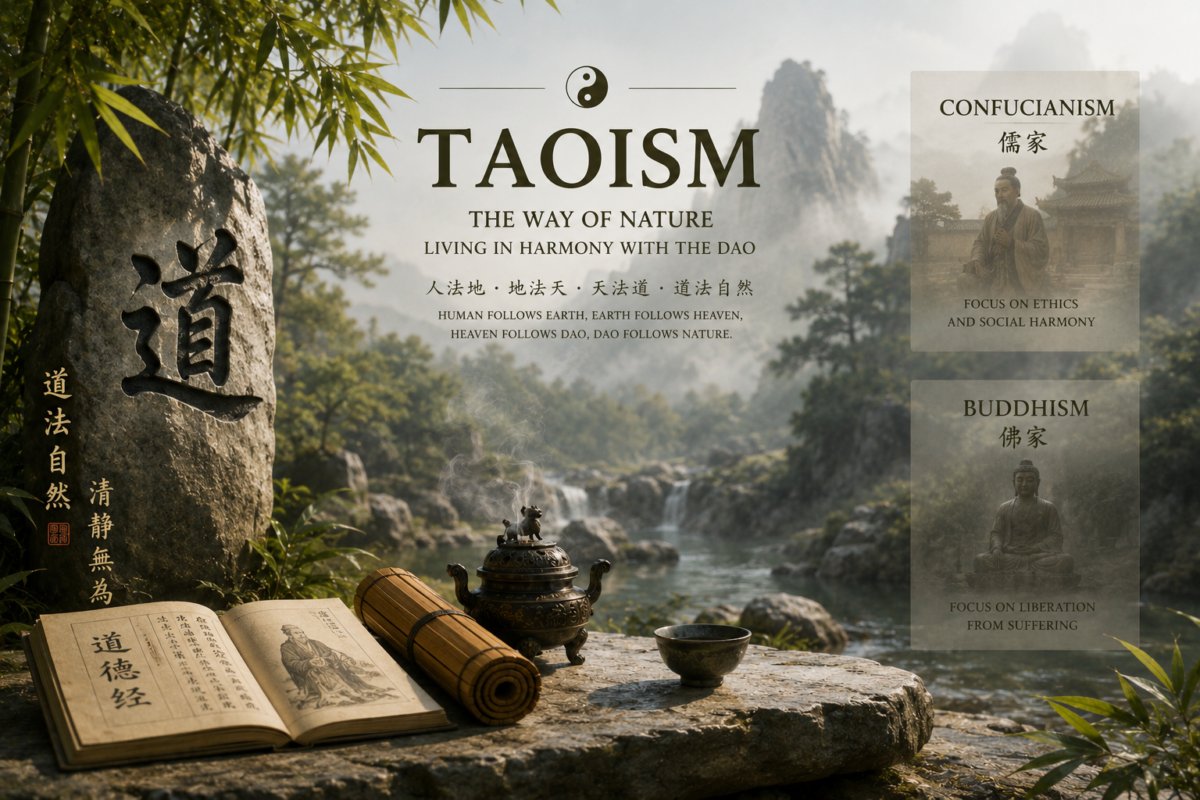
Taoism vs. Confucianism vs. Buddhism: Understanding China’s Three Teachings

Taoism vs. Confucianism and Buddhism in traditional Chinese culture

Introduction When people first study Chinese philosophy, they may expect Taoism, Confucianism, and Buddhism to function as three competing religions, each asking followers to choose one system over the others. Chinese history presents a more complicated picture. For much of China’s history, these three traditions developed alongside one another, sometimes cooperating, sometimes borrowing ideas and […]

Tea and Taoism: More Than Just a Drink

A traditional Chinese tea set with a decorative vase on a red table

Introduction Why Has Tea Accompanied Taoists for Centuries? For thousands of years, tea has quietly accompanied Chinese scholars, physicians, monks, and Taoists alike. Today, however, we live in a world filled with endless choices. Coffee gives us energy. Soft drinks satisfy our cravings. Countless beverages promise better health, greater focus, or more excitement. Yet despite […]

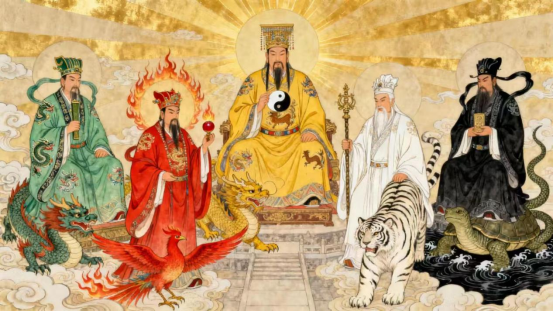
The Five Elders of the Five Directions in Taoism

Discover the Five Elders of the Five Directions in Taoism, their connection to the Five Elements, cosmic order, yin and yang, and Taoist cosmology.

The Five Elders of the Five Directions are among the highest celestial deities in the Taoist pantheon. They govern the five cosmic directions—East, South, Center, West, and North—and embody the origin and transformation of the Five Elements. Their belief system combines ancient Chinese cosmology, yin-yang philosophy, celestial worship, and Taoist theology, forming one of the […]

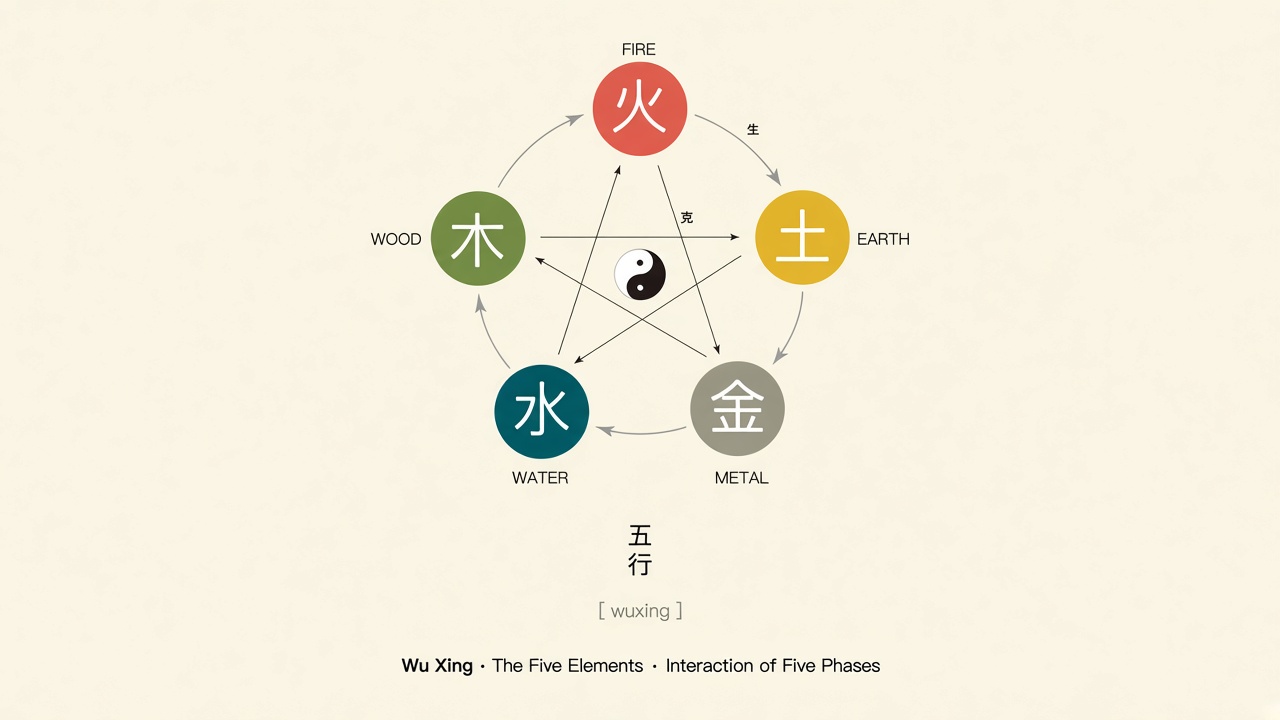
The Five Elements Theory in Taoism and Chinese Philosophy

Wu Xing five elements diagram showing the generating and overcoming cycles of Wood, Fire, Earth, Metal and Water with yin-yang symbol in the center

Introduction When people first encounter the Five Elements in Chinese philosophy, they often assume Wood, Fire, Earth, Metal, and Water refer to literal physical substances — much like the classical elements of ancient Greek thought. However, the Five Elements Theory represents something more dynamic than a list of materials. Rather than describing five literal substances, […]

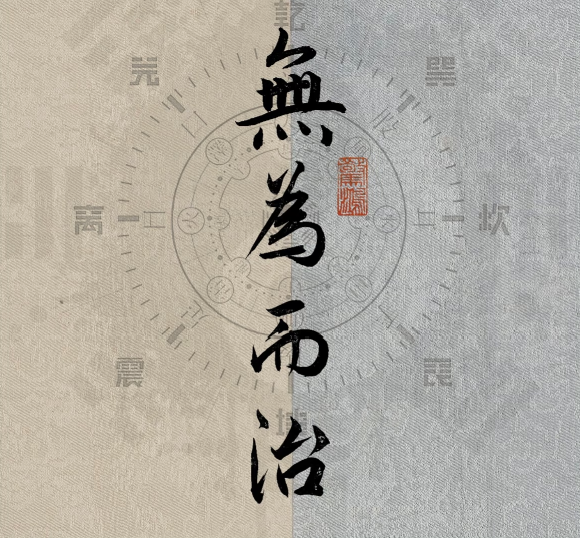
Governing by Non-Interference in Taoist Philosophy

Governing by non-interference

Governing by Non-Interference in Taoist Philosophy The Taoist principle of governing by non-interference, often associated with the concept of Wu Wei, is one of the most important political and philosophical teachings in Taoism. Originating from the ideas of Laozi in the Tao Te Ching, it advocates governing in accordance with natural laws rather than through […]

Taoist Philosophy vs. Taoist Religion: Key Differences Explained

Split illustration of Taoist philosophy versus Taoist religion showing serene mountains and scholar on the left, traditional temple and deities on the right

Introduction When people first explore Taoism, they often assume it refers to a single, unified tradition. In practice, the word covers two related but distinct layers — a philosophical school of thought, and a fully organized religion — that developed at different times and serve different purposes. Although Daoism and Taoism are deeply connected historically, […]

Tao Follows Nature: The Core Principle of Taoist Philosophy and Natural Harmony

Traditional Chinese ink wash painting featuring a seated philosopher in meditation, water ripples with a misty reflection, distant pine mountains, and dynamic calligraphic characters for "Tao Follows Nature" (道法自然).

Introduction When people first encounter the phrase “Tao follows nature,” they often assume it is simply poetic language about appreciating the natural world. Its meaning, however, runs considerably deeper. The principle comes from Chapter 25 of the Tao Te Ching, where Laozi writes: “Man follows Earth, Earth follows Heaven, Heaven follows the Tao, and the […]

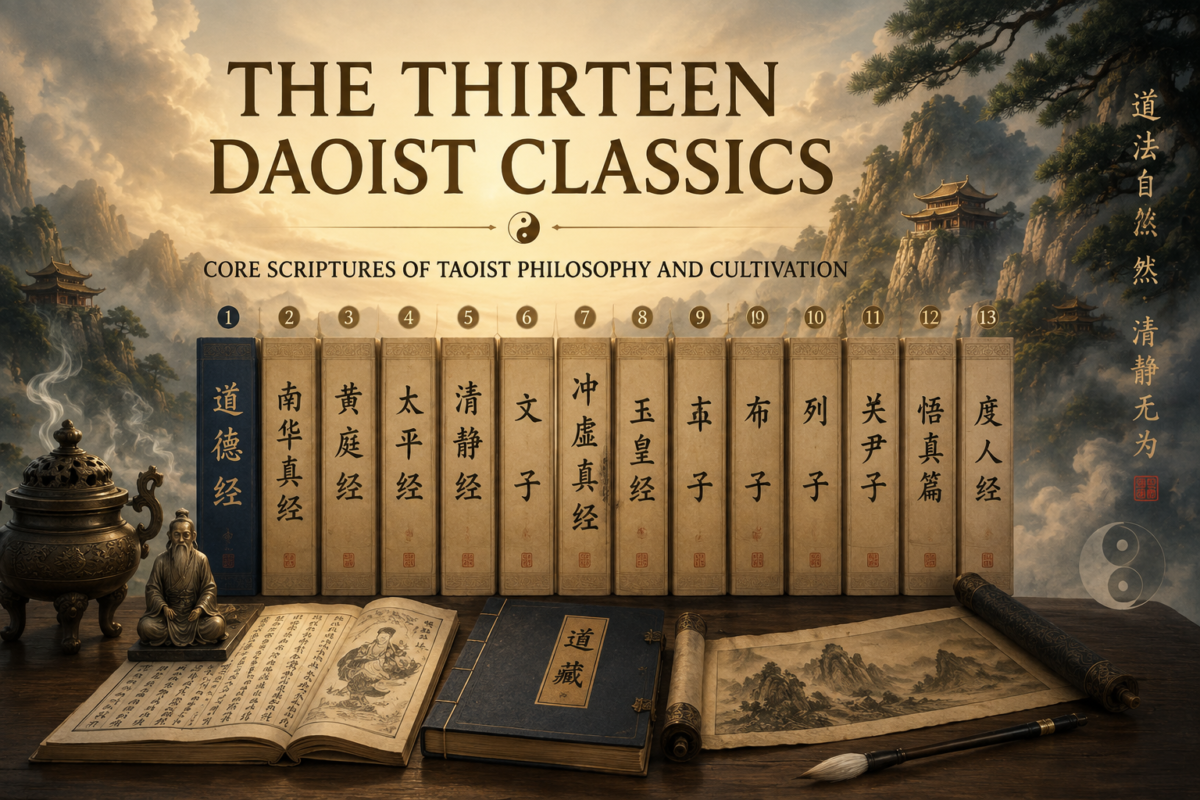
The Thirteen Daoist Classics: Core Scriptures of Taoist Philosophy and Cultivation

The Thirteen Daoist Classics displayed with traditional Chinese scriptures, scrolls, and Daoist imagery

Introduction When people first encounter Taoist scripture, they often assume the Tao Te Ching stands alone as the tradition’s defining text. In reality, that single work is only the entry point into a much larger canon — one that spans philosophy, alchemy, ritual, and governance across more than a thousand years of Chinese intellectual history. […]