Tag Archives: yin yang

How Taoist Philosophy Understands the Human Body

Yin Yang symbol,How Taoist Philosophy Understands the Human Body

Introduction When we think about the human body today, we often imagine a collection of separate systems. The heart pumps blood, the lungs bring in oxygen, the stomach digests food, and the brain coordinates everything else. Modern medicine has achieved remarkable advances by studying each organ individually, helping us better understand how the body functions […]
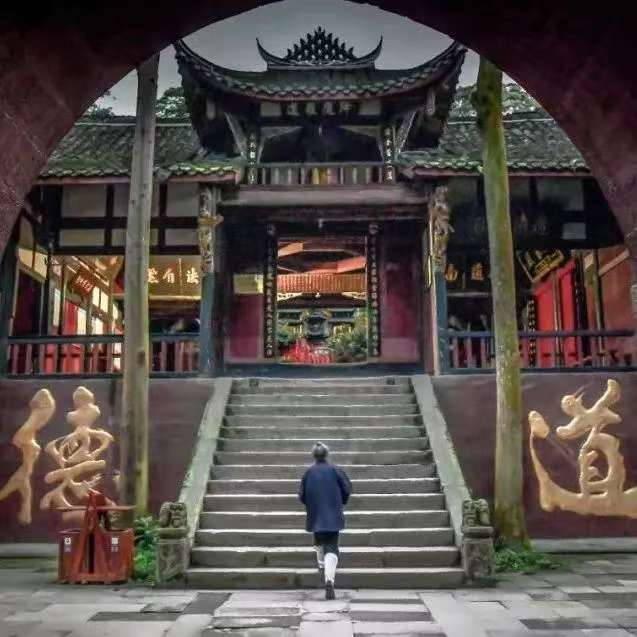
Taoist Master Teaches You Daily Practice Blessings (Collection)

Taoist Master Teaches You Daily Practice Blessings (Collection)

In Taoist tradition, blessing phrases act as a bridge between humans and the spiritual realm. More importantly, they help protect both physical and spiritual well-being. They also reflect core ideas of Taoism, as explained in Wikipedia.At the same time, these blessings carry thousands of years of wisdom and faith. In fact, they are not just […]

What Is Taoism? Understanding Taoist Philosophy and Daily Practice

Introduction When people think of Taoism and Taoist priests, two very different impressions often come to mind. Some see them as recluses who have withdrawn from the world, completely detached from human affairs. Others reduce Taoism to fortune-telling, feng shui, and superstition. However, both views miss the deeper truth of Taoist philosophy. Unlike a set […]

Complete Analysis of the 2026 丙午(Bing wu) Horse Year Tai Sui Folk Customs: Deity Positions, Zodiac Conflicts, and Rational Inheritance

2026 Bing Wu Fire Horse Year Tai Sui and Chinese zodiac folk customs

Introduction The year 2026 marks the Bing Wu (丙午) Year of the Horse, a combination of the Heavenly Stem Bing (丙) and the Earthly Branch Wu (午). In traditional Chinese calendrical thought, both are associated with the Fire element, which is why 2026 is commonly described as a Fire Horse year or a year with […]

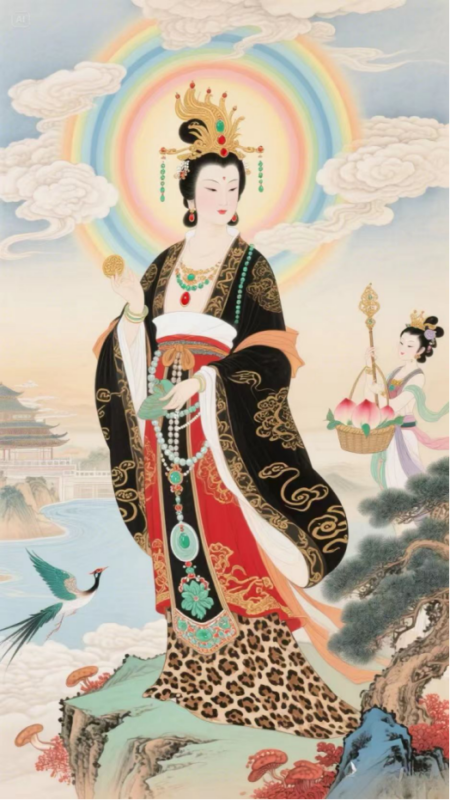
Xiwangmu: The Queen Mother of the West in Taoism and Chinese Mythology Xiwangmu

Discover Xiwangmu, the Queen Mother of the West in Taoism, her role in immortality, yin energy, longevity, and Chinese mythological traditions.

The Queen Mother of the West, also known as Xiwangmu or Goddess Wangmu, is one of the most important female deities in Chinese mythology and Taoism. She governs longevity, immortality, fertility, punishment, and the primordial yin force of the universe. Over thousands of years, her image evolved from an ancient fearsome deity into the majestic […]

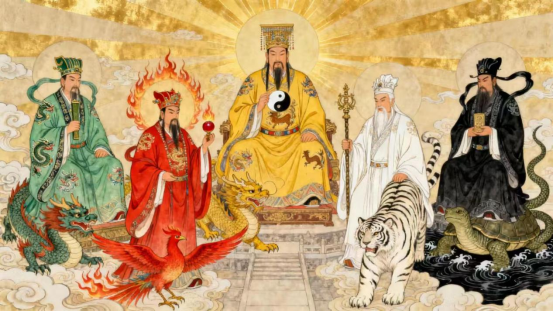
The Five Elders of the Five Directions in Taoism

Discover the Five Elders of the Five Directions in Taoism, their connection to the Five Elements, cosmic order, yin and yang, and Taoist cosmology.

The Five Elders of the Five Directions are among the highest celestial deities in the Taoist pantheon. They govern the five cosmic directions—East, South, Center, West, and North—and embody the origin and transformation of the Five Elements. Their belief system combines ancient Chinese cosmology, yin-yang philosophy, celestial worship, and Taoist theology, forming one of the […]

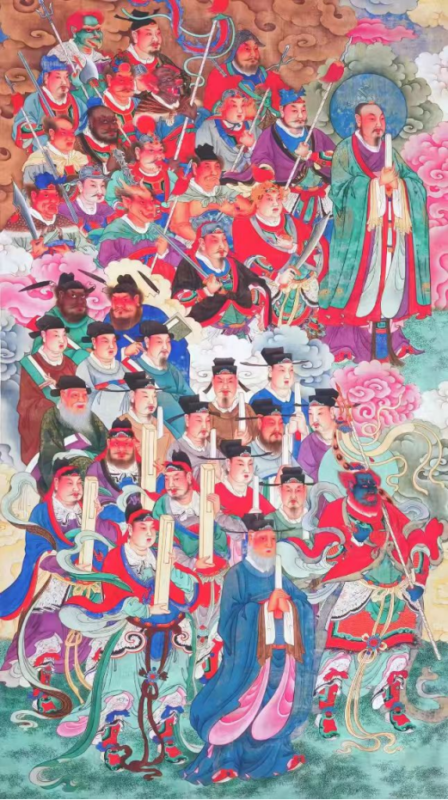
The Seventy-Two Earth Fiends in Taoist Mythology and Magic Arts

Seventy-Two Earth Fiends

The Seventy-Two Earth Fiends are one of the most mysterious and multifaceted groups of deities and spiritual forces within Taoist cosmology. Together with the The Thirty-Six Heavenly Generals, they form the complete dual structure of “Heavenly Spirits and Earthly Fiends,” representing the balance between celestial order and earthly transformation. Rooted in ancient Chinese astral worship, […]

Tao Follows Nature: The Core Principle of Taoist Philosophy and Natural Harmony

Traditional Chinese ink wash painting featuring a seated philosopher in meditation, water ripples with a misty reflection, distant pine mountains, and dynamic calligraphic characters for "Tao Follows Nature" (道法自然).

Introduction When people first encounter the phrase “Tao follows nature,” they often assume it is simply poetic language about appreciating the natural world. Its meaning, however, runs considerably deeper. The principle comes from Chapter 25 of the Tao Te Ching, where Laozi writes: “Man follows Earth, Earth follows Heaven, Heaven follows the Tao, and the […]